

If you’re feeling stuck in life and don’t know what to do, start with one recent moment when the feeling got stronger. What was happening? What felt difficult or missing? Once you can put even part of the problem into words, it’s easier to choose a small step that fits your circumstances.
Maybe it’s six in the evening. You’ve finished work, stopped for groceries, and put the shopping away. Someone asks what’s for dinner tomorrow. You’ve made dinner a thousand times, but the thought of having to plan another meal makes you want to cry.
Or maybe Saturday morning is finally yours. Your children need you less, the house is quiet, and you could do whatever you like. You’ve waited years to have some time to yourself. Now that it’s here, you can’t think of anything you actually want to do.
You may also feel uncomfortable admitting you’re dissatisfied. You appreciate the life you’ve built, and there are parts of it you want to keep. Still, you find yourself thinking, Is this how I want to spend the next ten years?
That question can stay open for a while. For today, think about the last time you felt this way. What was going on in the few minutes before you noticed it?
Key Takeaways
- Feeling stuck can come from too much pressure, too little meaningful activity, or real limits on your choices.
- One recurring moment can help you see what’s behind a feeling that seems impossible to explain.
- A specific description of the problem can reveal options you couldn’t see when everything felt tangled together.
- Before making a big decision, ask what you could find out, try, or get help with.
- Your next step can be as small as asking one question or finding one piece of information.
1. Why Do I Feel Stuck in Life?
Feeling stuck can show up as dread, irritation, restlessness, or a sense that every day is a repeat of the last. The feeling can be similar even when the circumstances are quite different.
When life feels overwhelming
Your week may be filled with work, household tasks, family responsibilities, and worries about money. Each demand may seem manageable on its own. Together, they can leave you with very little time when nobody needs anything from you.
Think about dinner. On Sunday, you might enjoy cooking something you chose. On a weekday, you may already have spent the drive home working out what’s in the fridge and whether you have time to stop at the shop. By the time someone asks what’s for dinner tomorrow, you’re already doing tomorrow’s work in your head.
If this feels familiar, pay attention to when the frustration starts. Is it when you begin cooking, when someone assumes you’ll cook, or when you realise there’s nobody else keeping track?
When life feels empty or directionless
A separation, a change at work, or children growing up can leave gaps in your week. At first, the extra time might be a relief. After a while, you may notice how few things you look forward to. You might miss learning something, making things with your hands, or being expected somewhere because people enjoy your company.
The feeling can also be more specific. You may have good friends and enjoy your own company, yet feel sad that you haven’t found a partner. Perhaps it hits you when you come home from a lovely evening and wish there were someone to share the ordinary parts of the day with. The closeness you’re missing deserves to be named in its own terms.
When everything looks fine but something feels missing
Your work may be steady, your relationships may matter to you, and your routines may keep things running. Still, think about the last time you did something because you were curious about it. What held your attention long enough that you forgot to check the time?
Maybe you used to draw, dance, or take the long way home just to be outside a little longer. You might miss how you felt while doing those things. It’s easy to lose track of that feeling when most of your time is organised around what other people need or expect from you.
When your circumstances leave you with few choices
You may rely on the income from a job you’re struggling to get through. Your health may limit what you can do on a given day. You may be able to picture a life you’d prefer and still have no affordable place to live or no safe way to make changes at home.
Several things can be true at once. You can be overworked, miss companionship, and have very little freedom to change your schedule. Begin with whichever part you can describe most clearly.
2. What If You Don’t Know What’s Wrong?
Find a moment you can picture
“What’s wrong with my life?” is a hard question to answer after a difficult day. You may find yourself reviewing years of decisions or getting caught up in thoughts like I should be happier by now.
Try a question you can answer from memory.
When did I feel especially stuck this week?
Maybe you were enjoying Sunday until you opened your work calendar and saw a meeting with your manager. Or you felt fine on your way home until you noticed your partner had left another household task for you. The moment may seem too ordinary to matter. Write it down anyway.
If you can’t remember when the feeling started, look for a time you tend to dread. Think about getting ready for work, walking through the front door, or reaching the end of a quiet weekend. What do you expect will happen next? Which part are you already bracing for?
Notice what was missing in that moment
Once you have a moment in mind, ask what you would have wanted to happen differently. If the feeling came up when you opened your work calendar, maybe you wanted time to prepare. Perhaps you wanted to be able to disagree with your manager without spending the evening worrying about the consequences.
These are possible starting points. See which one fits what you actually experienced.
| What you noticed | What you might have needed |
|---|---|
| I was exhausted before the evening began. | Rest, practical help, or a fairer share of the work |
| I had time to myself and felt restless. | Something interesting to do, a change of scene, or a reason to get out |
| I felt lonely after a day spent around people. | A conversation where you could talk about something that mattered to you |
| I felt trapped as soon as I thought about making a decision. | More say in what happens, reliable information, or someone to help you weigh your options |
| I felt flat after a day that went perfectly well. | More time for an interest or activity you’d choose for yourself |
Your first explanation may change as you notice more. If you thought you needed a quiet evening but felt better after a friend called, ask what was different about that conversation. If you felt restless until someone offered to take care of dinner, it may help to see what you’re like when you have time off that you can actually count on.
When did the feeling get stronger, and what would I have wanted to be different right then?
If the same feeling keeps coming up in different parts of your week, you can explore those patterns in more depth with my guide, How to Analyze Your Life Using the AVM Method.
3. How to Put the Problem Into Words
Separate what happened from what it brought up
In my work as a social worker, I often hear people describe a situation in terms of two outcomes. They’re going to have to live with it forever, or they’re going to have to change everything. When we talk through an ordinary day, we can often find a more specific question to work on first.
Take the thought My partner never helps me. Here’s what it might look like to put some detail around it.
- What happened? “I planned, shopped for, and cooked dinner every weekday. On Thursday I asked my partner to make it. They said they were too tired, so I made it again.”
- How did I feel? “I felt angry and taken for granted. I was tired too, and I wanted that to matter.”
- What did I expect would happen next? “If I ask again, I’ll have to explain why I need help, remind them later, and probably do it myself anyway.”
That expectation may come from years of trying. If your partner has agreed to help before and the arrangement keeps falling back to you, include that history. It tells you something important about the kind of change you’d need.
Write one sentence that names the difficulty
You might arrive at I’m tired of being responsible for dinner every day, including finding someone to take over when I need a break. That sentence gives you more to work with than I can’t stand my life. It also explains why occasional help may bring very little relief if the responsibility still rests with you.
A similar distinction can help at work. I hate my job might become I like working with clients, but I spend half the day reacting to last-minute requests and then stay late to finish my own work. Now you have a clearer idea of what you’d want to change about this job or look for in another one.
What part of the situation am I struggling with most right now?
Write one sentence in your own words. If several things come to mind, pick the one you’d like to understand first.
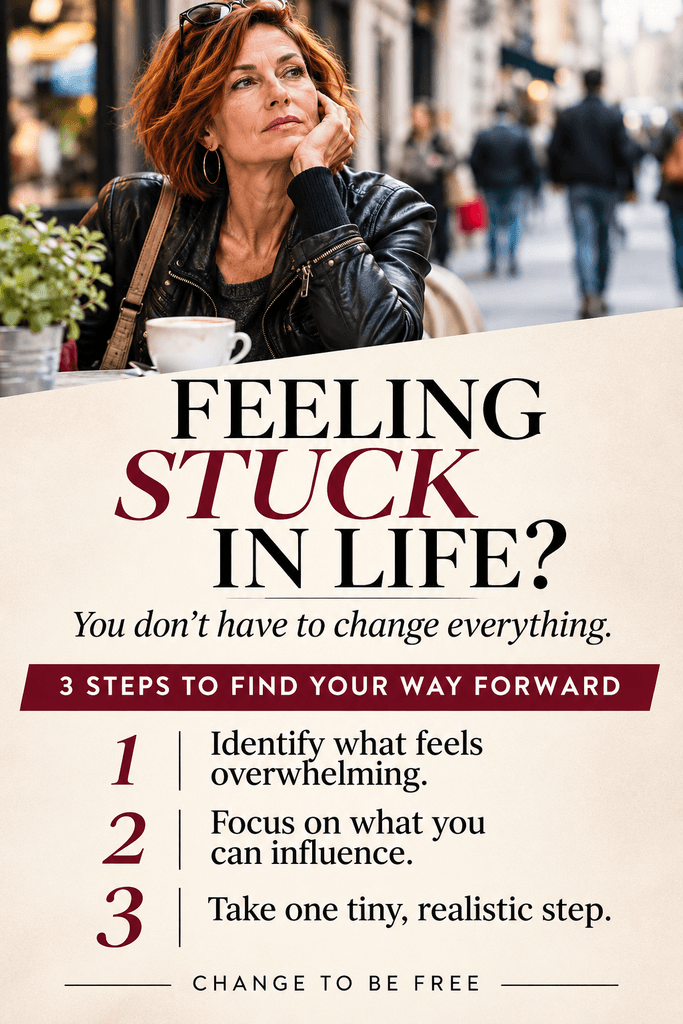
4. Look for the Options Between the Extremes
Ask what you could do before deciding
When you’re worn down by a situation, two choices can take up all the space. Quit or stay forever. Leave or put up with everything. Change my whole routine or do nothing.
What could I find out or try before I make that decision?
- If you’re thinking about leaving your job, read one vacancy in a related field. Look at what the role involves, which parts you’d enjoy, and whether the pay and hours could work for you. You might discover that you want similar work with more predictable hours.
- If you’re tired of managing every meal, think about what sharing responsibility would look like. Where it feels safe to ask, you could propose one evening when someone else takes care of the meal from deciding what to make to clearing up afterwards.
- If you want to meet someone but dating feels discouraging, notice which part is wearing you down. If the apps are draining your energy, you could ask a friend whether she knows of a small social event you’d actually enjoy. You get to decide whether it sounds like somewhere you’d want to spend an evening.
- If you miss having something of your own, look up one activity you’re curious about. Checking where it takes place and whether you can try it once may be enough for now.
The point of these options is to give yourself a little more information. You can read about a job without applying. You can ask what a class costs and decide next week whether to go.
If asking someone to share the work brings up guilt, you’ll find practical examples in my guide to setting boundaries in relationships without guilt.
Include the limits you’re working with
If your household depends on your salary, the financial risk of leaving a job belongs in the decision. If your energy changes from day to day, a weekly commitment may be difficult even when you’d enjoy the activity. Looking closely at those limits can help you tell which options are available now and which would require more support.
If you fear threats, violence, or retaliation from a partner, speaking privately with a specialist support service may help you explore your circumstances and safety. You can ask what support is available while you’re still deciding what you want to do.
5. How to Find Your Next Step When You Feel Stuck
Choose something you want to understand or improve
Go back to the sentence you wrote about what’s difficult. What would make that situation a little easier? What would you like to know about it?
If you feel lonely at the end of the week, you might want to find out whether you’d enjoy having a regular plan with someone. If you’re tired of being the person who keeps track of everything at home, you might want a clearer picture of what you do automatically. Start with the question that matters to you this week.
Make the step small enough to do on an ordinary day
“Get out more” leaves you with a string of decisions. “Ask Anna if she’s free for a twenty-minute walk on Saturday” gives you one thing to do. You can decide where to walk if she’s free.
Depending on your situation, your first step might be to:
- Write one sentence the next time you feel especially drained at work.
- List the tasks you do to get one weekday dinner on the table.
- Ask a friend if she has time for a short call.
- Check whether a Saturday class offers a single session you can try.
- Spend ten minutes on something you used to enjoy.
Choose something you can tell you’ve done. If you plan to ask a question, sending the message is the step. The other person’s answer is information you can use when it comes.
Check what the step requires
Think of the week ahead as it actually looks. When could you do it? How much energy or money would it take? Do you have the time, privacy, or support you need?
If a phone call feels like too much, send a message. If the thought of an evening class makes you want to cancel before you’ve even booked it, see whether there’s a time of day that suits you better.
Notice what you learn afterwards
Suppose you make plans for a walk and feel better just knowing it’s in your calendar. Perhaps you’ve missed having something to look forward to. If the walk itself feels good but the thought of doing it every Saturday feels like a burden, you might prefer occasional plans to a standing commitment.
Give yourself a moment to ask what made the experience easier or harder than you expected. What you learn can guide what you do next.
6. What If You Still Don’t Know What to Do?
Give yourself a few days to notice when the feeling shifts. Write down a moment when things felt particularly heavy or a moment when you felt a little more like yourself. One line is enough.
I felt tense until I handed in the report suggests something different from Work was fine, but the tension came back as soon as I got home. Two or three observations may give you a starting point you couldn’t find by thinking about the week as a whole.
You can also talk through one recent moment with someone you trust. Try saying, “I’ve been feeling stuck lately. Could I tell you about something that happened this week? It would help to say it out loud.” You may hear which part matters as you tell the story.
If hopelessness, emptiness, or exhaustion persists and makes ordinary days difficult to get through, consider talking with a healthcare or mental health professional. You can begin with what you’ve observed. “I’m getting through work, but when I get home, I can barely manage anything else” gives you a place to start the conversation.
7. A Five-Minute Exercise to Find Your First Step
Think about the past week. Give yourself one short answer per question. If the answer is “I don’t know yet,” move on and see whether another question is easier.
- What feels most difficult or missing in my life right now?
- When do I notice this feeling most strongly?
- What specific situation or need might be connected to it?
- What is one possibility I haven’t considered yet?
- What is one small, safe, realistic step I could take this week?
For example, you might feel adrift on Saturday mornings now that your children spend more time out of the house. You realise you miss having a reason to get outside early. You used to enjoy taking photographs and wonder whether you still would. Your step could be to take your phone outside for ten minutes on Saturday and see what catches your eye.
If question three is hard to answer, use question five to choose a step that might help you answer it. The next time this feeling comes up, I’ll write down what I was doing and what I wished were different.
Frequently Asked Questions
Some arrangements keep working long after the reasons you chose them have changed. A routine that gave you stability through a difficult period may now take up time you’d like to spend differently. Ask yourself, <em>If I were setting up my week today, which parts would I choose again?</em>
Start with a comparison you can answer. Would you like more variety at work or more predictability? A quiet morning alone or a morning with someone you enjoy? If both sound good, ask which one you’ve had less of lately. A preference about one ordinary day can give you a direction to explore.
Decide what would make the situation a little more manageable while you’re still in it. If caring for someone leaves you with very little time, for example, identify one errand another person could take over. Asking someone to pick up a prescription on Tuesday gives them a specific way to help.
Yes. A predictable routine can feel flat when it rarely gives you anything to look forward to. Try something you’ve been curious about and pay attention to which part you enjoy. It might be the activity itself, being around other people, learning something, or getting out of the house.
Choose something that would make tomorrow slightly easier. If you’re carrying a long mental list, write down what needs attention first and what can wait a day. You can come back to bigger questions when there’s a little more room to think.
Apply This Today — Start With One Small Step
Think of one recent moment when you felt stuck. Write one sentence about what you wished were different right then.
Maybe it’s I wanted someone else to notice what needed doing and take care of it. Once you can name what you wanted in that moment, you have something specific to come back to when you’re ready to decide what to do next.
Further reading
How to Change Your Life After 40 With the AVM Method