
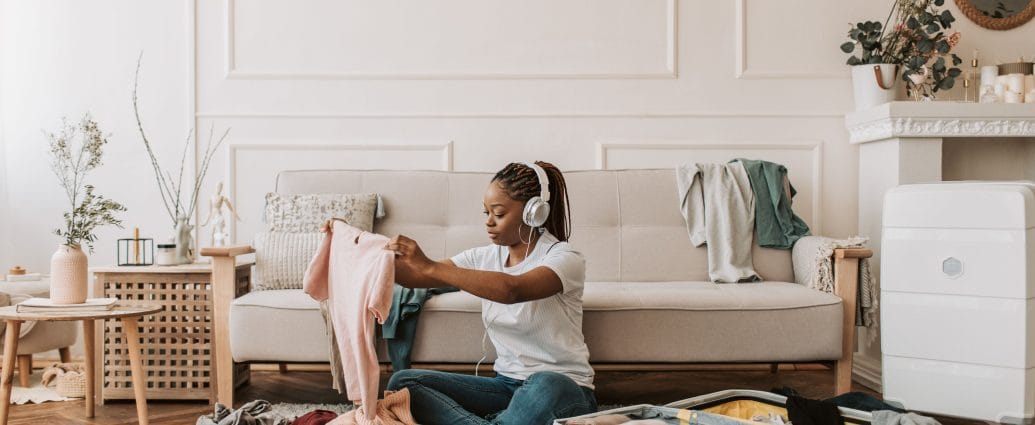
Home organization after life changes is rarely just about tidying, storage, or deciding where things belong. After a divorce, burnout, bereavement, a move, children leaving home, or another major transition, your routines may change much faster than your physical environment. The result can be a home that still reflects an earlier chapter even though your daily life has already moved on.
During stressful periods, organizing usually becomes less important than simply getting through the day. Laundry may accumulate, paperwork may remain untouched, rooms may lose their purpose, and boxes may stay unpacked far longer than expected. This does not necessarily mean you have poor organization skills. It often means your home has not yet adapted to what has changed in your life.
This is why organizing after a major transition can feel emotionally different from ordinary decluttering. You are not only deciding whether to keep an object or where to place it. You may also be deciding which routines, roles, possessions, and parts of your previous identity still belong in the life you are building now.
At Change To Be Free, the AVM Method offers a practical way to work through this process. Analyze helps you understand what has changed and how your home reflects that change. Visualize helps you decide how you want your next chapter to feel and function. Modify turns that direction into small, realistic changes that make daily life easier without forcing you to transform your entire home at once.
The goal is not to erase the past or create a completely new home overnight. It is to gradually create an environment that supports your present routines, current priorities, and the person you are becoming. For the broader foundation behind this approach, start with Home Organization and Living Space.
Quick Answer
Home organization after life changes means adapting your home to your current routines, priorities, and lifestyle rather than preserving systems that no longer fit. By using the AVM Method to analyze your home, visualize your next chapter, and make gradual practical changes, you can create a home that supports everyday life and long-term well-being.
Why Major Life Changes Affect Your Home
Homes are built around routines. We develop places for everyday objects, create household habits, and arrange rooms according to the people who live there and the activities that happen most often. When life changes significantly, those routines may disappear quickly while the physical environment remains almost exactly the same.
That mismatch can create a sense that the home no longer works in quite the same way. A room may still look familiar but feel inconvenient. A cupboard may contain things you no longer need. A spare room may suddenly have no clear purpose, while another area becomes overloaded because your routines have shifted.
The problem is often not the home itself, but the mismatch between the way it is organized and the life you are living now.
Your Home Reflects Your Current Life
A home naturally adapts to the way people live, but that adaptation is often slow. During stable periods, small systems develop almost automatically. After a major life change, however, those systems may no longer fit.
A dining room that once hosted family dinners may rarely be used. A child’s room may become empty after they move out. A wardrobe may still contain clothing from a career you left years ago. A home office may become necessary after a job change even though there is no obvious space for it.
These examples show why home organization after life changes is not simply about creating more storage. It is about deciding whether your environment still supports the life you are actually living.
Old Systems Often Stop Working
Many people continue using organizational systems long after the circumstances that created them have changed. A kitchen may still be arranged around a larger family. Household responsibilities may still assume that two adults share tasks even after a separation. Storage may reflect hobbies or routines that are no longer part of everyday life.
When these systems stop working, the usual response is often to try harder. You clean more often, buy another organizer, or move the same items from one place to another. But if the system itself no longer matches your current reality, extra effort will not solve the underlying problem.
Sometimes the more useful question is not how you can organize the system better, but whether the system still belongs in your life at all.
Emotional Transitions Often Show Up in Physical Clutter
Some clutter is practical. Other clutter carries emotional meaning. A box of belongings from a previous relationship, clothing connected to an old identity, children’s possessions after they leave home, or personal items belonging to someone who has died can feel much harder to sort than ordinary household objects.
The difficulty is not always about the item itself. It may represent a relationship, a role, a hope, or a version of life that has ended. This is why emotionally loaded areas often remain untouched long after practical clutter has been resolved elsewhere.
Recognizing this distinction matters. You can organize practical spaces quickly while allowing more emotionally significant decisions to move at a slower pace.
Step 1: Analyze Your Current Home
The Analyze phase begins by looking at your home without immediately trying to fix it. Before buying storage products, rearranging furniture, or starting a large decluttering project, take time to understand what has changed and where the biggest mismatch now exists.
This step helps separate visible clutter from the deeper issue. Sometimes the problem is too many possessions. Sometimes it is an outdated routine. Sometimes a room has lost its purpose. And sometimes the emotional meaning of the space makes it difficult to know what to do next.
What Has Changed?
Start by asking what changed since your home last felt comfortable or easy to manage. The answer may be obvious, such as divorce, bereavement, burnout, a move, retirement, or children leaving home. In other cases, the change may have happened gradually through shifts in work, health, relationships, or family responsibilities.
Once you identify the transition, look at how it changed your routines. Do you cook differently? Spend more time at home? Need more privacy? Have fewer people using certain rooms? Need a workspace that did not exist before? These practical changes often explain why old systems are no longer working.
Which Rooms No Longer Support Your Life?
Walk through your home and notice which spaces feel easy and which feel heavy, confusing, or inconvenient. You are not looking for the messiest room. You are looking for the spaces where daily life and the current environment no longer match.
For example, the bedroom may still be arranged around routines from a previous relationship, the kitchen may contain systems designed for a larger family, or a spare room may no longer have a clear purpose. These examples give you clues about where your home has not yet adapted to your present life.
The goal at this stage is not to solve each problem. It is to recognize the mismatch clearly enough that you can make better decisions later.
What Feels Heavy Every Day?
Some organization problems are practical, while others create emotional resistance. You may avoid opening a cupboard because of what is inside. You may walk past an unused room and feel sadness, guilt, or uncertainty. You may continue storing boxes from a move because unpacking them would force you to decide what belongs in your new life.
Notice these reactions without immediately forcing a solution. The areas that feel heaviest may eventually become some of the most meaningful spaces to change, but they do not always need to be the first place you start.
If you want a deeper framework for this stage, continue with Analyze Your Home Before You Organize It.
How Different Life Changes Affect Your Home
Different transitions create different organizing challenges. Understanding the pattern connected to your situation can help you make decisions that fit the reality you are living through rather than applying generic organizing advice.
Home Organization After Divorce
After divorce, a home may still reflect the routines and belongings of a shared relationship. Clothing, furniture, photographs, documents, and everyday systems may continue to assume that two people live and make decisions together even when that is no longer true.
For example, a bedroom may still be arranged exactly as it was during the relationship even though the way you use the room has changed. Repositioning furniture, changing one visible element, or creating storage around your own routines can be a practical first step toward making the room work for your current life.
The task is not simply to remove another person’s belongings. It may also involve deciding how the home should function now, which routines need to change, and what would help the space feel more like your own. You do not need to redesign everything immediately. Start with the areas that affect everyday life most.
Home Organization After Burnout
Burnout often leaves physical traces throughout the home because everyday maintenance becomes difficult when mental and physical energy are depleted. Laundry, paperwork, dishes, unopened mail, unfinished projects, and clutter hotspots may accumulate during months when work and basic responsibilities already require most of your available energy.
Imagine that clean laundry repeatedly remains in baskets because washing and drying are manageable but folding and putting everything away feels like another separate project. Rather than creating a more complicated laundry system, the better solution may be to simplify the cycle so that fewer steps and decisions are required.
In this situation, the answer is rarely a demanding organization plan. Focus on reducing friction. A functional kitchen counter, an easier laundry routine, or a clearer place for paperwork may matter far more than organizing storage areas nobody uses every day.
Home Organization After Children Leave Home
An empty nest can create both physical space and emotional uncertainty. A room that was part of your daily family life may suddenly sit unused, and changing it can feel as though you are removing something important.
You do not need to turn the room into something completely different. One approach is to preserve a section for your child’s meaningful belongings while allowing another part of the room to support something you now need, such as reading, hobbies, guests, exercise, or work.
The goal is not to erase your children’s place in your life. It is to allow your home to reflect the fact that your own needs matter too.
Home Organization After Bereavement
Sorting belongings after someone dies is different from ordinary decluttering. Everyday objects may carry memories, identity, grief, and a sense of connection, making even simple decisions feel unexpectedly difficult.
You do not need to resolve every possession at once. Practical items can often be handled first, while more meaningful belongings can wait until you feel ready. The pace can be different for each category, room, or person.
If grief feels especially intense, organization should not become another deadline. The home can change gradually as you adjust to a reality that has changed profoundly.
Home Organization After Moving
Moving creates a different challenge because possessions from an old environment enter a new space with different rooms, storage, routines, and dimensions. It is common for boxes to remain unpacked because there is no obvious place for their contents or because the old organization system no longer fits.
Instead of automatically recreating your previous home, observe how you actually use the new one. Decide where daily routines naturally happen and organize around those patterns.
A move can be an opportunity to question old systems rather than simply transferring them from one address to another.
Start With Stability When You Are Starting Over
Sometimes a major transition does not fit neatly into one category. You may leave a relationship, move, change jobs, recover from burnout, or rebuild several areas of life at the same time.
When many things are changing, focus on stability rather than transformation. Create a few spaces that make everyday life feel manageable and predictable. A functioning bedroom, bathroom, kitchen, and entryway can provide enough structure while other parts of your home remain unfinished.
Starting over does not require you to know exactly what your future home should look like. It only requires enough clarity to create the next useful step.
Step 2: Visualize Your Next Chapter
Once you understand what has changed, pause before making major decisions. The Visualize phase is where you begin defining what you want your home to support now rather than automatically recreating old routines.
This is not about imagining a perfect interior. It is about deciding how you want daily life to feel and what your environment needs to make easier.
Stop Organizing for the Person You Used to Be
One of the most important questions after a major life transition is whether your home is still organized around an older version of yourself.
You may have a wardrobe full of clothing from a career you no longer have, hobby supplies connected to interests you no longer enjoy, furniture arranged around family routines that have changed, or entire rooms designed around roles you no longer need to perform.
These belongings are not necessarily bad or unwanted. But they deserve to be evaluated from the perspective of your current life rather than automatically preserved because they once mattered.
Design Your Home for Your Current Life
Imagine an ordinary weekday several months from now. Think about how you want mornings, work, meals, evenings, and weekends to function.
Perhaps you need calmer mornings, easier food preparation, more privacy, a comfortable place to work, or a room where you can finally return to a hobby. Maybe you want less visual clutter because your energy is still recovering, or you want more open space because your family structure has changed.
Your answers create a practical direction. They help you decide which spaces deserve attention first and what kind of organization will genuinely support you.
Let Your Home Support Your Future
A home can hold memories while still making room for new experiences. These two things do not have to compete.
An unused bedroom can gradually become a creative space. A corner previously filled with storage can become a reading area. A bedroom can be rearranged after divorce so that it reflects your preferences rather than the previous shared setup.
These changes do not have to be dramatic. Sometimes one visible change is enough to signal that the home is beginning to reflect a new chapter.
If you want to explore this phase further, continue with How to Improve Your Well-Being at Home.
Step 3: Modify Your Home Gradually
The Modify phase turns understanding and direction into practical change. After a major life transition, this step works best when it is gradual and specific rather than ambitious.
Instead of asking how to reorganize the entire home, choose one change that will improve everyday life. Once that system works, move to the next.
Choose One Meaningful Change First
Your first project does not need to be the biggest. It should be the change that creates the most useful improvement.
Perhaps the bedroom needs to work differently after divorce. Maybe the kitchen counter needs to be cleared because burnout has made meal preparation difficult. After an empty nest, you may want to begin deciding what purpose one unused room could serve.
A meaningful change creates both practical and emotional momentum because you notice the difference in everyday life.
Create New Homes for New Routines
Life transitions often create new routines, and new routines need places to happen.
If you now work from home, paperwork and work equipment need a logical base. If fewer people live in the house, kitchen and laundry systems may need to become simpler. If you have begun exercising, reading, crafting, or another activity, your home may need to make space for that part of your life.
Organize around what you actually do now rather than forcing new routines into systems designed for the past.
Remove What Belongs to the Old System
Some belongings remain because they still serve a purpose. Others remain because nobody has questioned them since life changed.
Review items and systems connected to roles, routines, or activities that no longer exist. This might include duplicates from a shared household, furniture that no longer fits the way a room is used, clothing from an old career, or supplies connected to hobbies you have consciously left behind.
You do not need to remove everything connected to the past. The goal is to stop giving unnecessary space to systems you no longer need.
If excess belongings are making it difficult to move forward, How to Declutter Your Home Without Feeling Overwhelmed gives you a more detailed process for reducing clutter without turning the entire home into one large project.
Test the New Setup Before Expanding
Do not assume that the first solution will be perfect. Use the space for a while and notice whether daily life feels easier.
If things repeatedly end up in the wrong place, the problem may be the system rather than your discipline. If putting something away takes too many steps, simplify it. If a room still feels uncomfortable, reconsider what you want it to support.
Small adjustments help your home evolve naturally instead of forcing you into another rigid system.
Common Mistakes After a Major Life Change
Trying to Recreate Your Old Home
It is natural to recreate familiar routines because familiarity feels safe. However, rebuilding the same setup can preserve systems designed for circumstances that no longer exist.
Before replacing or rearranging something exactly as it was, ask whether that arrangement still supports your current life. Some parts may remain useful, while others may need to change significantly.
Making Every Decision at Once
Major transitions already require many decisions. Adding hundreds of household decisions at the same time can quickly become exhausting.
Separate practical decisions from emotional ones. You may be ready to reorganize the kitchen but not ready to sort photographs or personal belongings connected to a relationship or loss. Progress does not require every category to move at the same speed.
Organizing Before Understanding Your Needs
It is tempting to buy new storage or begin moving furniture because action creates a sense of progress. But organizing without understanding what you actually need often creates another temporary system.
Start by identifying the routine or problem you want to improve. Then choose a practical solution that supports that need.
Expecting Your Home to Feel Different Overnight
A home can change quickly physically while still taking time to feel emotionally familiar. Rearranging a room does not automatically resolve the feelings connected to the transition that made the change necessary.
Give yourself time to live in the new setup. Some spaces may feel right immediately, while others will need several adjustments before they begin to feel comfortable again.
How to Make Your Home Feel Like Yours Again
After a major transition, making your home feel like yours again does not require a complete redesign. A simple three-part approach can help you create visible change while keeping the process manageable.
Make One Visible Change
Choose something you see every day and change it intentionally. You might rearrange a piece of furniture, clear a surface, remove an object connected entirely to an old routine, add something you genuinely enjoy, or change how one frequently used area functions.
A visible change can make the transition feel more concrete because the environment begins reflecting a decision you have made in the present.
Create One New Routine
Physical organization lasts longer when it supports a real behavior. Choose one routine connected to the space you changed.
This might mean creating a new place for incoming paperwork, putting away laundry differently, preparing your work area each evening, or resetting one room before bed. The routine should make the new organization easier to maintain rather than adding another demanding task.
Reclaim One Space for Your Current Life
Choose one small area that has been defined primarily by the past and give it a purpose that matters now. It could be a corner, shelf, desk, chair, cupboard, or entire room depending on your situation.
You do not need to remove every reminder of what came before. The goal is simply to make sure that your present life also has visible space in your home.
Over time, these small decisions accumulate. Your home gradually becomes less like a preserved version of the past and more like a living environment that continues changing with you.
Key Takeaways
- Home organization after life changes is about adapting your environment to new routines, priorities, and roles.
- Major transitions often make old organization systems less useful even when they once worked well.
- Use the AVM Method to Analyze what has changed, Visualize what you want your home to support, and Modify your environment gradually.
- Divorce, burnout, grief, moving, and an empty nest can each create different practical and emotional organization needs.
- Practical decisions and emotional decisions do not have to happen at the same pace.
- Start with one meaningful change that improves everyday life.
- Your home can preserve important memories while still making space for your present and future.
Frequently Asked Questions
Why Does My Home Feel Different After a Major Life Change?
Your routines, priorities, relationships, or identity may have changed while your physical environment remained largely the same. Rooms and systems that once made sense can therefore begin feeling inconvenient or emotionally uncomfortable. Adjusting your home gradually can help bring your surroundings back into alignment with the life you are living now.
Should I Organize Immediately After a Divorce or Loss?
There is no universal timeline. Practical areas that affect everyday life can often be organized earlier, while emotionally significant possessions may need more time. You do not have to sort everything simply because the transition has happened, and different areas of the home can change at different speeds.
What If Certain Belongings Are Emotionally Difficult to Sort?
Separate emotionally difficult belongings from ordinary household clutter. You can continue improving other areas while leaving one clearly defined box, cupboard, or category for later. This allows you to make practical progress without forcing decisions before you are ready.
Which Room Should I Organize First?
Start with the room that has the greatest impact on everyday life or the space that creates the most repeated friction. For many people this is the kitchen, bedroom, bathroom, or entryway. After a life change, however, one emotionally significant room may also be the most meaningful place to begin.
Can Organizing My Home Help Me Move Forward?
Organization cannot resolve grief, burnout, divorce, or other emotional experiences on its own. However, a home that supports your current routines can reduce daily friction and make it easier to establish new habits. Your physical environment can become one practical part of adjusting to a changed life.
Continue Your Home Organization Journey
Home organization after life changes becomes easier when you work with your current reality instead of trying to force old systems to keep working. Begin with what has changed, decide what you want your home to support now, and make practical adjustments one area at a time.
For the broader framework, return to Home Organization and Living Space. For a deeper Analyze process, continue with Analyze Your Home Before You Organize It. If excess belongings are part of the problem, use How to Declutter Your Home Without Feeling Overwhelmed.
Your home does not need to forget your past in order to support your future. It can preserve what still matters while gradually making more room for the life you are living now.