
Have you ever tried to visualize your future and found yourself unable to answer what you truly want from life? Perhaps you immediately thought about what you do not want: constant exhaustion, financial anxiety, unhealthy relationships, work that drains you, or days that feel like a series of obligations. Knowing what you no longer want is an important beginning, but it is not the same as knowing what you want to create. Most people know what they want to change long before they know what they want to build in its place.
Many people spend years fixing individual problems without asking what kind of life those changes are meant to support. They change jobs but remain unhappy, organize their homes but still feel overwhelmed, earn more money without feeling secure, or pursue health goals without becoming more at ease in their bodies. Goals can be useful, but they work best when they grow from a clearer understanding of who you are, what matters to you, and how you want everyday life to feel.
This is the purpose of the Visualize stage of the AVM Method. Analyze helps you understand your present life; Visualize helps you decide what you want to create next. Instead of focusing only on what is wrong, you begin forming a direction that feels personal, meaningful, and genuinely your own.
- How do I want to feel?
- What matters most to me?
- What do I want more of, less of, or differently?
- What brings me joy?
- How do I want my ordinary days to look?
Your answers create direction. Without it, change can become a collection of disconnected efforts. With it, even small decisions can begin moving you toward a life that feels more like your own.
What You’ll Need
Before you begin, give yourself 20–30 minutes of uninterrupted time, a notebook or AVM worksheet, and a quiet place where you can think honestly. Bring curiosity rather than pressure. This is not a test, and there are no perfect answers. The purpose is simply to reconnect with yourself and notice what feels true.
What Does It Mean to Visualize Your Future?
Many people think visualizing means imagining a dream house, a perfect career, or a list of ambitious goals. Those images may be part of a vision, but in the AVM Method, Visualize means creating a picture of a life that genuinely fits you. It is not the life that impresses other people, meets every family expectation, or copies what social media tells you to want. It is your life.
A meaningful vision includes more than achievements. It includes how you want to feel, what you want your relationships and work to support, what gives your life meaning, how you want to care for yourself, and who you want to become. The purpose is not to predict the future or design a flawless life. It is to create enough clarity to recognize what belongs in your life and what no longer fits.
Why It Matters to Visualize Your Future
Imagine driving somewhere you have never been without entering a destination into your navigation. You may eventually arrive somewhere interesting, but you will probably spend a long time taking unnecessary turns. Life can work in a similar way. Without a personal vision, many decisions become reactions rather than choices. You accept opportunities because they appear, remain in situations because they feel familiar, and continue habits because you have always followed them.
Slowly, life can become something that happened to you rather than something you intentionally shaped. A clear vision becomes an internal compass. It will not make every decision easy, but it can help you ask whether a choice moves you toward the life you want, reflects your values, supports the person you want to become, or is driven mainly by fear and habit.
Why It’s Hard to Visualize Your Future
Some people can immediately describe their ideal future, while others draw a complete blank. If that happens to you, nothing is wrong. You may have learned to judge every wish before you explore it, asking whether it is realistic, affordable, practical, acceptable to other people, or too late to pursue. These questions matter, but they should come after discovery rather than replacing it.
You may also have spent years responding to urgent needs: raising children, supporting other people, managing illness or financial pressure, recovering from burnout, or simply getting through demanding days. When life revolves around what must be handled next, curiosity becomes quiet and your own preferences can become difficult to hear. This does not mean you have no desires or identity. It means you may need time, safety, and attention to reconnect with them. Before you can visualize your future, you may first need time to reconnect with your own preferences, needs, and identity.
Look Back Before Life Became So Busy
Sometimes the easiest way to reconnect with yourself is to look backward before looking forward. Your younger self is not necessarily your truest self, and you do not need to return to who you once were. Life changes us, priorities evolve, and maturity brings new knowledge. Still, childhood, adolescence, or early adulthood may contain clues about interests, qualities, and desires that were pushed aside rather than genuinely lost.
- What fascinated me?
- What could I spend hours doing?
- What made me lose track of time?
- What subjects naturally interested me?
- Which parts of my personality came naturally?
- What did I stop doing because life became too busy?
- What parts of myself did I hide because they were criticized or misunderstood?
Perhaps you loved drawing, reading, helping people, spending time with animals, building things, being in nature, listening to music, learning, travelling, writing, organizing, teaching, or solving problems. Those interests may still be quietly waiting for your attention.
Start with Small Experiments
You do not have to rediscover yourself overnight. Instead of trying to answer the enormous question “Who am I?”, ask what makes you feel a little more like yourself. Small experiments often reveal more than endless thinking. You might return to an old hobby, visit a place you once loved, read about a subject that used to fascinate you, spend an afternoon without trying to be productive, or notice what naturally captures your attention. Finding yourself is rarely one dramatic moment. It usually happens through many small experiences that bring relief, curiosity, or quiet excitement. Sometimes the most important realization is simply, “I missed this.”
Begin with How You Want to Feel
When you visualize your future, begin with how you want your life to feel rather than only with what you want to achieve. When people think about changing their lives, they often begin with goals: finding a new job, losing weight, saving more money, or improving a relationship. Goals answer the question, “What do I want to achieve?” Before that question, however, another one may be even more important: “How do I want to feel?”
Imagine two women who both want to change careers. On the surface, they share the same goal, but their desired experiences are different. One wants to feel secure after years of financial uncertainty. Another wants to feel creative because her work feels repetitive and uninspiring. A third wants calm after constant pressure, while someone else wants respect after years of being overlooked. The same goal can lead to very different choices depending on the feeling behind it. That is why feelings belong near the beginning of your vision, not only at the end.
Use an Emotion Wheel
An emotion wheel can be used as a vocabulary tool. It helps you move beyond broad words such as happy, calm, or confident and identify more precise emotional qualities and inner states that you want your life to support. As you look through the wheel, notice which words create recognition, relief, or longing.
- peaceful
- hopeful
- appreciated
- curious
- playful
- accepted
- capable
- relaxed
- connected
- proud
- inspired
- safe
- grounded
- energized
- understood
Choose the words that make you think, “Yes, I miss feeling like that.” The purpose is not to eliminate sadness, fear, anger, or disappointment. Every meaningful life includes difficult emotions. Instead, ask which emotional qualities you want your relationships, routines, work, home, and choices to support more often.
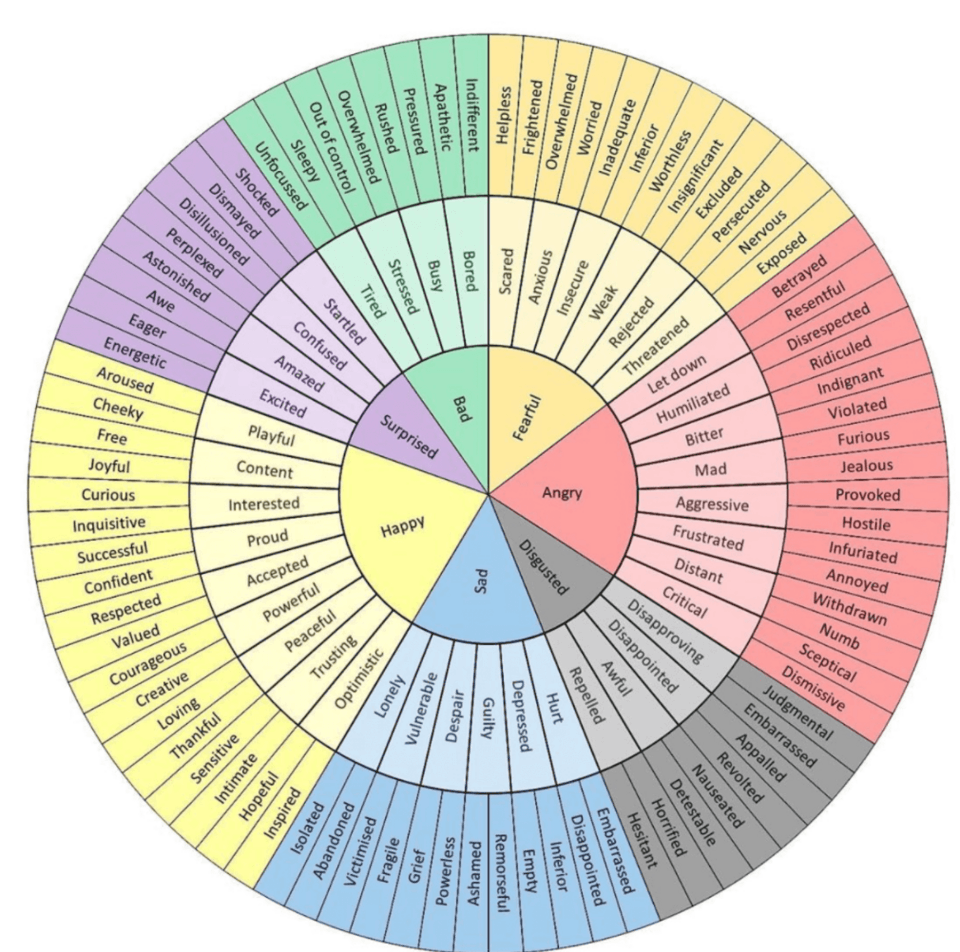
By Sydtomcat – Own work, CC BY-SA 4.0, https://commons.wikimedia.org/w/index.php?curid=93676472
Feelings, Values and Desires
Before you set meaningful goals, you need clarity in three connected areas. Feelings describe how you want to experience your life. Values reveal what matters enough to guide your choices. Desires show what you want more of, less of, or differently. Together, they turn the vague wish for a better life into a direction that belongs to you.
Feelings
Feelings and inner states describe how you want to experience your life. You may want to feel calm, secure, confident, connected, joyful, peaceful, respected, energized, hopeful, curious, loved, free, capable, relaxed, or inspired. They answer the question: “How do I want to feel?”
Values
Values describe what matters most to you. They influence your decisions, the way you treat yourself and other people, and the kind of life that feels meaningful. They answer the question: “What is important to me?”
Desires
Desires describe what you want more of, less of, or differently in your life. They may involve experiences, circumstances, relationships, routines, opportunities, or changes you want to make. They answer questions such as: “What do I want to experience, create, change, or leave behind?”
For example, you might want to feel peaceful, value balance, and desire fewer unnecessary commitments and more quiet evenings. Or you might want to feel confident, value growth, and desire new skills or a career change. Instead of jumping directly into goals, explore these three layers first. They create a much stronger foundation for meaningful change.
Clarify Your Values
Values act like an internal compass. When your life reflects them, you are more likely to feel authentic, fulfilled, and at peace with your decisions. When you repeatedly ignore them, life can feel empty, confusing, or exhausting even when it appears successful from the outside. If freedom matters deeply to you, for example, a tightly controlled job may drain you. If family matters most, earning more may not feel worthwhile if you never see the people you love. If creativity matters, work that leaves no room for new ideas may slowly disconnect you from yourself.
Your values influence every area of life; they are not separate rules that apply only at work, at home, or in relationships. The list below includes values and guiding life priorities. Choose the words that best express what you want your life and decisions to reflect.
Personal Values List
- acceptance
- authenticity
- adventure
- balance
- beauty
- belonging
- calm
- compassion
- connection
- contribution
- courage
- creativity
- curiosity
- fairness
- family
- freedom
- friendship
- generosity
- growth
- health
- honesty
- humour
- independence
- joy
- kindness
- learning
- loyalty
- love
- peace
- persistence
- purpose
- respect
- responsibility
- security
- self-respect
- simplicity
- stability
- trust
- wisdom
Choose ten words that stand out, then narrow the list to five. Ask which would be hardest to live without, which you have been ignoring, and which you want future decisions to reflect. For each choice, write one sentence describing what living that value would look like in everyday life. There are no perfect values to choose; the aim is not to select the most impressive words, but the ones you genuinely want your life to express.
Explore Your Desires
Many adults stop allowing themselves to want things, not because they have no desires but because responsibility has trained them to dismiss those desires quickly. They tell themselves they should be grateful, other people need them first, the timing is wrong, or it is too late. Sometimes the exercise feels difficult simply because you have not given yourself permission to want something for yourself in a very long time. Desires are not instructions you must follow, but they are valuable information about what your life may be missing.
Desires List
- more peace
- more energy
- more time for yourself
- more laughter
- deeper relationships
- honest conversations
- meaningful work
- greater financial security
- fewer unnecessary obligations
- better sleep
- a calmer home
- more time in nature
- more creativity
- more learning
- stronger boundaries
- less rushing
- less conflict
- less people-pleasing
- less guilt
- less clutter
- more adventure
- more rest
- more support
- a simpler life
- work that fits your personality
- a life that feels more like your own
Read the list slowly and notice which ideas create relief, curiosity, excitement, longing, or even sadness. Those reactions often point toward something important. Ask which desires surprised you, which you have ignored, which feels most important now, and which you dismissed because it seemed unrealistic. Sometimes allowing yourself to admit “I want this” is the beginning of change.
Joy Is Not a Luxury
Many people think joy should come after everything else is finished: after the house is clean, the children grow up, the promotion arrives, the mortgage is paid, or life becomes easier. The problem is that another responsibility will always be waiting. Joy is not the reward for a perfectly organized life; it is one of the things that makes life worth organizing in the first place.
Pay attention to what genuinely gives you energy, not what impresses other people or what you think you should enjoy. Joy may come through reading, gardening, baking, hiking, photography, music, dancing, travelling, solving problems, writing, helping others, or sitting quietly with a cup of coffee. Ask what you would still enjoy if nobody judged you, paid you, or praised you for it. Joy does not need to prove its usefulness; it simply needs to be yours. If you have lost touch with what you enjoy, How to Find Hobbies That Balance Your Life can help you explore activities that fit your personality, interests, time, and energy.
Imagine the Person You Want to Become
When people imagine the future, they often focus on what they want to have: a better job, a healthier body, a more organized home, more money, or a stronger relationship. These things matter, but a deeper vision also asks who you want to become. Your future identity is not a list of achievements; it is a description of how you want to live, respond, care for yourself, relate to others, and make decisions. You might describe your future self as someone who:
- trusts herself
- follows through on small promises
- communicates honestly
- sets healthy boundaries
- manages money with confidence
- cares for her health with kindness rather than punishment
- enjoys learning
- stays grounded during conflict
- allows herself to rest
- asks for help when she needs it
- laughs more often
- chooses relationships that feel safe and respectful
For now, you do not need to know every step required to become this person. Your task is to describe her clearly enough that she can begin guiding your future choices. Identity gives your vision a human shape: it tells you not only what you want your life to contain, but how you want to move through it.
Visualize Your Ordinary Day
Many people imagine the future through major milestones such as marriage, a career change, buying a house, improving their health, retiring, or travelling. Those moments matter, but they make up only a small part of life. Most of life is ordinary. It is made of mornings, workdays, meals, conversations, errands, evenings, and sleep. If your ordinary days support you, your life is more likely to feel good as a whole. Instead of imagining only a dream holiday or dramatic success, imagine an ordinary Tuesday in the life you want to create. Do not picture a perfect day. Picture one that feels realistic, supportive, and sustainable.
Morning
- How do I want to feel when I wake up?
- What pace do I want my morning to have?
- What would help me begin the day feeling more like myself?
Work
- What kind of work am I doing?
- Do I feel respected and able to use my strengths?
- Do I have enough energy left when work finishes?
Relationships
- Who do I spend time with?
- How do those relationships make me feel?
- Do I feel heard, accepted, and safe being myself?
Home
- How do I want my home to feel?
- Which qualities—such as calm, comfort, practicality, or warmth—matter most?
- What would make everyday life easier?
Evening
- What do I do after work?
- How do I rest or reconnect with myself?
- How do I want to feel before going to sleep?
Visualize Your Future Across Every Area of Life
When you visualize your future across your whole life, your direction becomes clearer than when you focus on one isolated goal. A successful career may lose its appeal if it leaves no energy for health or relationships, while a beautiful home may not create peace if daily life is overloaded. Use the five AVM pillars below to check whether your vision reflects the parts of life that matter most to you.
Family, Partner, Friends
How do you want your relationships to feel? What kind of partner, parent, family member, or friend do you want to be? What kind of treatment or relationship patterns do you no longer want to accept?
Career, Work & Income
What do you want work to provide besides money? Which strengths do you want to use? How do you want work to fit into the rest of your life? If you are unsure whether your current work still fits the life you want to create, begin with Career Analysis: Are You on the Right Path?
Health, Fitness, Diet & Style
How do you want to feel in your body? What kind of energy do you want to have? How do you want to care for yourself without using punishment or unrealistic standards?
Hobbies & Activities
What makes you curious? What do you enjoy simply because you enjoy it? Which experiences, skills, or interests do you want more room for?
To understand why enjoyable activities matter for your overall well-being and quality of life, read Why Hobbies Are Important for Quality of Life.
Home
How do you want your home to feel? What would make everyday life easier? What kind of environment helps you rest, function, and feel like yourself? Notice that these questions do not begin with “What should I achieve?” They begin with “What kind of life do I want to experience?” That difference is central to the Visualize stage.
Your Vision Doesn’t Have to Look Like Anyone Else’s
One of the easiest mistakes is to borrow someone else’s dream. Social media shows beautiful homes, successful businesses, perfect morning routines, luxury holidays, minimalist kitchens, ideal bodies, and happy families. Without noticing, you may begin collecting goals that look impressive but do not fit your personality, energy, responsibilities, or values.
Your ideal life may be much quieter. Perhaps you do not want to build a large business; perhaps you want to work four days a week, eat dinner without rushing, walk your dog every evening, grow vegetables, read before bed, spend weekends with people you love, feel financially secure, and still have energy after work. There is no prize for wanting the biggest dream. The best vision is the one that feels true. For some people, that vision is not defined by greater excitement or ambition. It begins with relief.
Sometimes Relief Is More Important Than Excitement
Many personal development books ask what excites you. That can be a valuable question, but it is not always the right place to begin, especially after burnout, trauma, chronic stress, or years in survival mode. Your nervous system may not be searching for excitement. It may be searching for relief from constant responsibility, financial anxiety, conflict, exhaustion, or the pressure to pretend that everything is fine.
Pay attention to what creates a sense of ease. The future you need most may not look exciting from the outside; it may simply feel peaceful. A vision such as “I want to wake up without feeling overwhelmed” can be deeply meaningful. Relief is not a small or unambitious desire. It may be the first sign that you are moving toward a life that genuinely fits you.
Create a Clear Vision for Your Future
You began with what you wanted to change. Now bring together what you have discovered about what you want to create: how you want to feel, what you value, what you desire, what brings you joy, who you want to become, and how you want an ordinary day to feel. Use the sentence starters below to write one or two connected paragraphs. Focus on direction rather than detailed goals, deadlines, or a perfect plan.
- I want my life to feel…
- The values I want my decisions to reflect are…
- I want more… and less…
- I want to become someone who…
- The relationships I want are…
- My work supports me by…
- My home feels…
- I make time for…
- I no longer want to build my life around…
- The life I am creating is…
Do not worry about grammar or whether your vision sounds inspiring. Write honestly. Your vision does not need to be perfect or complete; it needs to feel true enough to give you direction.
Your Vision Is Not a Contract
Some people avoid imagining the future because they fear choosing the wrong direction. But your vision is meant to guide you, not trap you. As you grow, recover, change roles, or enter a new stage of life, some priorities will become more important and others will fade. That does not make an earlier vision wrong; it means you have changed. Return to it during major transitions or whenever your direction no longer feels clear, keeping what still feels true and revising what no longer reflects your life.
From Vision to Action
A vision without action remains an idea, while action without a vision can become busyness. The AVM Method brings the two together. First, you Analyze your current life so you understand where you are. Then you Visualize the life you want to create so you have a meaningful direction. Finally, you Modify your habits, routines, and decisions so your daily life gradually begins to reflect that vision. When you are ready to move from direction to practical change, return to How to Change Your Life: Analyze, Visualize, Modify Method to see how the Modify stage turns your vision into practical changes.
Reflection Questions
Use these questions as a final summary of what you discovered throughout the article. You do not need to answer them all at once; return to them whenever you want to reconnect with your direction.
- How do I want to feel most days?
- Which five values or guiding priorities matter most to me?
- What do I want more of, less of, or differently in my life?
- What brings me genuine joy?
- Who do I want to become?
- What do I want an ordinary day to feel like?
- What expectation from other people no longer fits me?
- What have I been building my life around until now?
- What do I want to build it around from now on?
- What would my future self thank me for beginning?
Key Takeaways
- Visualizing your future is about creating meaningful direction, not predicting what will happen.
- Before setting goals, explore how you want to feel, what you value, and what you truly desire.
- Your vision should reflect your priorities rather than other people’s expectations.
- A complete vision includes your identity, ordinary days, relationships, work, health, interests, and home.
- Your vision is allowed to evolve as you grow and your circumstances change.
- The Modify stage turns your direction into practical changes in everyday life.
FAQ: Visualize Your Future: Create a Life That Feels Like You
That is completely normal, especially after years of stress, caregiving, burnout, or focusing on other people’s needs. Start by exploring how you want to feel rather than trying to plan your entire future. Clarity usually develops gradually through reflection and small experiments.
Not necessarily. A clear direction is often more useful than a detailed ten-year plan. Your vision can guide your decisions even when many details are still unknown.
It probably will. As you learn, grow, and enter new stages of life, your priorities may change too. Think of your vision as a living document that can be revised whenever it no longer reflects who you are or what you need.
No. Visualizing does not mean pretending that life is easy or ignoring genuine challenges. It means creating a realistic and meaningful picture of the life you want to build so your choices have a clearer direction.
The next step is the Modify stage of the AVM Method. Once you know where you want to go, you can begin making practical changes to your habits, routines, and everyday choices that gradually bring your vision to life.
Final Thoughts
Learning to visualize your future gives every other life change a clearer purpose. Many people spend years improving individual parts of life without deciding what they want those changes to create. They become skilled at solving problems but rarely pause to ask what would make ordinary life feel meaningful, peaceful, authentic, or alive. Visualize gives that question a place in the change process.
Your vision does not need to be perfect, impressive, or permanent. It only needs to be honest enough to help you recognize what belongs in your life, what no longer fits, and what deserves your attention next. Analyze helped you understand where you are. Visualize has helped you decide what you want to create. The next stage, Modify, turns that direction into habits, choices, and practical changes that gradually shape everyday life.
Before you move on to the Modify stage, pause for a moment.
- Which part of your vision excites you most?
- Which part feels unfamiliar?
- What surprised you while reading?
- Which small change would make tomorrow feel a little more like the life you want?