

When you feel overwhelmed by your home, the idea to organize your home can feel too big. You may look at the kitchen, the laundry, the papers, the wardrobe, the hallway, and the unfinished corners, and feel as if everything needs your attention at once. But you do not need to organize your whole home in one weekend. You need one small place to begin. When you organize your home with small, realistic steps, you reduce daily chaos without turning home organization into another source of pressure.
This is the Modify step of the AVM Method. After you analyze what is not working and visualize the kind of home that would support your well-being, you begin to make practical changes. Not dramatic changes. Not perfect changes. Small changes that make real life easier. A calmer home is not created by doing everything at once. One practical approach is to organize your home one room at a time, focusing on one decision, one habit, and one system at a time.
Key Takeaways
- You do not need to organize your whole home at once.
- Start with one visible area that affects your daily life.
- Remove obvious clutter before emotional clutter.
- Give daily items a clear home.
- Create one simple system for one repeated problem.
- Maintain your home with a short reset, not pressure.
- The goal is not perfection. The goal is a home that is easier to live in.
Why Organizing Your Home Feels Overwhelming
Home organization often feels overwhelming because the problem is not only physical clutter. It is also the feeling of being behind. You may see dishes and remember the meal you still need to plan. You may see laundry and think about work clothes, school clothes, towels, bedding, and the next full basket. You may see papers and feel the pressure of bills, documents, appointments, and decisions you have postponed. This is why the home can feel louder than it looks.
When every room carries unfinished tasks, your mind keeps receiving small signals that something still needs to be done. Even when you sit down, part of you may stay alert. The American Psychological Association has discussed how clutter can increase stress and why people often struggle with accumulated belongings, which is one reason small practical steps matter more than pressure or perfection.
The goal is not to shame yourself into action. Shame may create short bursts of cleaning, but it does not create sustainable systems. A calmer approach begins with one question: What small change would make daily life easier this week?
Before You Organize Your Home, Start With One Area
The biggest mistake is starting too big. If you try to organize your home by thinking about the whole house, your mind may shut down before you begin. The kitchen, bathroom, bedroom, wardrobe, storage, papers, laundry, children’s things, and sentimental items all compete for attention. Do not start with the whole home. Start with one area that affects your daily life.
This may be the kitchen counter, the entryway, your bedside table, one wardrobe shelf, one drawer, the bathroom sink, or one corner of the living room. Choose a place you see or use every day, because even a small improvement there can change how your day feels. You are not choosing the most impressive area. You are choosing the area with the highest daily impact.
If your mornings are stressful, start near the entryway, clothes, bags, or keys. If evenings feel chaotic, start with the kitchen, dishes, or one reset surface. If rest feels difficult, start with your bedroom or bedside area. Small areas create movement. Movement creates confidence. Confidence helps you continue.
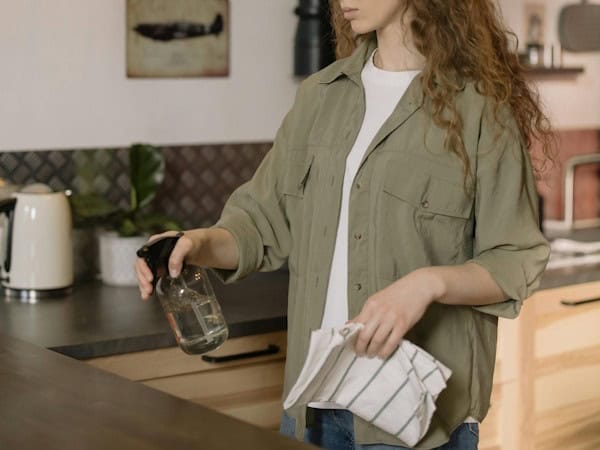
Step 1: Organize Your Home by Clearing One Visible Surface
The first step to organize your home is to clear one visible surface. Not the whole room. Not every cabinet. One surface. This could be a kitchen counter, dining table, bathroom sink, nightstand, coffee table, or desk. Choose a place that creates stress every time you see it. A visible surface matters because your eyes meet it often. When that surface is full of random items, your brain receives the message that life is unfinished. When that surface becomes clearer, even slightly, the room can feel calmer.
Do not start by making the surface beautiful. Start by making it usable. Remove everything that clearly does not belong there. Put trash in the bin. Put dishes in the kitchen. Put papers in one temporary paper place. Put clothes in the laundry. Put daily items where they are actually used. If you do not know where something belongs, place it in one temporary decision basket. Do not let one difficult item stop the whole process. The goal of this step is not perfection. The goal is visible relief.
Step 2: Remove the Obvious Clutter First
Once one surface is clearer, remove the obvious clutter. Obvious clutter is anything that does not require a deep emotional decision. It is packaging, expired products, broken items you do not plan to fix, duplicate papers, empty bottles, old receipts, things that belong in another room, or items you already know you do not use.
Start here because obvious clutter gives you quick progress without exhausting your emotions. Do not begin with sentimental objects, old photos, painful memories, or items connected to identity. Those may need more time. If you start there too early, you may become overwhelmed and stop. Home organization becomes easier when you respect your emotional energy. Begin with what is clear.
Ask yourself:
- Is this trash?
- Is this expired?
- Is this broken and not worth repairing?
- Does this belong in another room?
- Do I use this in my current life?
- Is this an easy decision?
Easy decisions build momentum.
Step 3: Organize Your Home by Giving Daily Items a Clear Place
A home becomes chaotic when daily items do not have a clear place. Keys, bags, chargers, documents, glasses, skincare, cleaning products, shoes, coats, mail, and laundry often create daily mess because they are used often but stored poorly. If you want to organize your home in a way that lasts, focus on daily items first. Ask yourself where each item naturally wants to land. Not where it “should” go in an ideal home. Where it actually lands in your real life.
If keys always land on the kitchen counter, maybe they need a small tray near the entrance. If mail always lands on the dining table, maybe you need one simple paper basket. If clothes always land on the bedroom chair, maybe your wardrobe system is too difficult or you need a small place for clothes that can be worn again. Do not fight your real habits too hard. Work with them. A clear home for daily items reduces repeated decisions. You do not have to keep asking, “Where should this go?” The answer becomes visible. This is how organization becomes a support system instead of a discipline test.
Step 4: Create One Simple Home System
After you clear one area and give daily items a place, create one simple system. A system is not a complicated plan. It is a repeated way of handling something that happens often. For example, a paper system could be one tray for incoming papers and one weekly time to sort them. A laundry system could be one basket for clothes that need washing and one place for clothes that can be worn again. A kitchen system could be keeping breakfast items together or creating one clear area for meal preparation. Your home does not need many systems at once. It needs one system that solves one repeated problem.
Choose a problem that returns often:
- papers on the table
- laundry on the chair
- bags and shoes near the door
- dishes left too long
- bathroom products everywhere
- cleaning items scattered in different places
- clothes that no longer fit mixed with clothes you actually wear
Then create a simple rule.
For example:
- All incoming papers go into one basket.
- Keys and sunglasses go in one tray.
- Laundry is started on two fixed days.
- The kitchen counter is reset after dinner.
- Skincare stays in one bathroom basket.
- Shoes used daily stay near the entrance; the rest go away.
The simpler the system, the more likely you are to use it.
Step 5: Maintain With a Ten-Minute Reset
Organization does not last because you did it once. It lasts because you return to it gently. This is where many women get discouraged. They organize one area, life happens, the area becomes messy again, and they think they failed. You did not fail. A home is used every day, so it needs small returns. A ten-minute reset can help you maintain your home without turning cleaning into an exhausting project. Choose one time of day, usually evening, and use ten minutes to return the most visible things to their places.
This is not deep cleaning. It is a reset. You might clear the kitchen counter, put shoes near the door, move dishes, fold one small pile, prepare your bag for tomorrow, or return items to one room. Ten minutes is enough because the goal is not to finish everything. The goal is to prevent daily life from becoming too heavy. A reset teaches your mind that you can return to order without panic.
How to Organize Your Home Without Becoming Rigid
A supportive home needs structure, but it also needs flexibility. If your home organization system only works when you have a perfect week, it is not a real system. Real life includes tired evenings, busy mornings, children, work pressure, illness, unexpected visitors, emotional days, and weeks when you simply have less energy. This is why your systems need to be simple enough to return to.
Do not create routines that depend on motivation. Create routines that work when you are tired. A realistic home system allows for imperfection. It gives you places to return things, but it does not demand that everything looks perfect all the time. It helps you recover after a messy day instead of making you feel ashamed.
The question is not: How do I keep my home perfect?
The better question is: How do I make it easier to return to calm?
That is the kind of organization that supports real life after 40.
What to Do When You Feel Stuck
If you feel stuck, make the task smaller. If one room feels too much, choose one surface. If one surface feels too much, choose five items. If five items feel too much, choose one item. This may sound too small, but it works because overwhelm often comes from seeing too many decisions at once. You do not need to feel ready to begin. You only need to make the first step small enough that your nervous system does not resist it.
Try this: Pick up one item and ask, “Where does this belong?”
Then do the next one. Do not open ten categories at once. Do not empty every drawer onto the floor unless you have time and energy to finish. Do not create a bigger mess than you can emotionally handle that day. Gentle progress is still progress.
The Modify Step: How Small Changes Help You Organize Your Home
This article is the Modify step of the Home Organization and Living Space pillar. Before you modify, it helps to analyze. That means looking at your home honestly and noticing what drains your energy, what patterns keep repeating, and what your space is showing you.
You can start here: Analyze Your Home: How to Analyze Your Space and Create a Supportive Home
After that, you visualize. That means creating a clear picture of how you want your home to feel and function before you make more practical changes.
You can continue here: Visualize Your Home: How to Create a Living Space That Supports Your Well-Being
This article helps you modify. It turns awareness and direction into small action.
For the full Home pillar overview, read: Home Organization and Living Space: How to Create a Home That Supports Your Life
Reflection Questions Before You Start
Use these questions before you organize your home this week:
- Which small area affects my daily life the most?
- What visible surface would give me the most relief if it were clear?
- What clutter is easy to remove today?
- Which daily items need a clear home?
- What repeated problem needs one simple system?
- What ten-minute reset would help me most?
- Where am I expecting perfection instead of support?
- What is one small change I can realistically maintain?
Do not use these questions to create a long project list. Use them to choose your next step.
FAQ: How to Organize Your Home
The easiest way to organize your home when you feel overwhelmed is to start with one small area. Choose one surface, drawer, shelf, or corner that affects your daily life. Do not start with the whole house.
Small progress lowers pressure and helps you build momentum.
Start with obvious clutter first. Remove trash, expired items, broken things, duplicates, and items that clearly belong somewhere else. Avoid starting with sentimental or emotionally difficult items if you already feel overwhelmed.
Easy decisions help you begin without getting stuck.
You can start with ten minutes a day. A short daily reset is often more sustainable than a long cleaning session once in a while. Use ten minutes to return visible items to their places, clear one surface, or prepare one area for the next day.
Consistency matters more than intensity.
Cleaning removes dirt, dust, and mess. Organizing creates a system for where things belong and how daily routines work.
A clean home can become messy again quickly if there is no simple system. An organized home is easier to maintain because items have clear places and routines are simpler.
Keep your home organized by creating simple systems and returning to them regularly. Give daily items a clear place, reduce obvious clutter, and use a short reset routine.
The goal is not to keep your home perfect. The goal is to make it easier to return to order.
Yes. You can organize your home without buying storage products. First remove what does not belong, reduce obvious clutter, and decide where daily items should live. Only buy storage later if you know exactly what problem it will solve.
Storage products do not fix unclear decisions. Clarity comes first.
Continue With the Home Organization and Living Space Pillar
This article is part of the Home Organization and Living Space pillar in the Change To Be Free system.
For the full overview of this pillar, read: Home Organization and Living Space: How to Create a Home That Supports Your Life
If you have not yet analyzed your home, start here: Analyze Your Home: How to Analyze Your Space and Create a Supportive Home
If you want to create a clearer vision before taking more action, continue here: Visualize Your Home: How to Create a Living Space That Supports Your Well-Being
✅ Download the Free Worksheet: 5 Steps to a More Organized Home

Ready to bring calm, clarity, and control into your space?
This simple, printable worksheet will guide you step-by-step through the same process I used to transform my home after divorce. Whether you’re starting with one drawer or the whole house, these prompts will help you declutter with purpose, set up easy systems, and create routines that stick.
Use it to:
- Assess what’s really working (and what’s not)
- Let go of what no longer serves you
- Build a peaceful, functional home that fits your current season of life
Click button to download your free copy and start today.
