

Why You Should Analyze Your Finances Before Creating a Budget
Many people believe that creating a budget is the first step toward improving their finances. In reality, learning how to analyze your finances comes first. If you do not know how much money you earn, where it goes, or which spending habits shape your financial life, it is difficult to create a plan that truly works. That is why the first step in the AVM Spending Plan is not changing your spending. It is analyzing it.
Financial analysis is not about judging yourself or feeling guilty about past decisions. It is about becoming aware of your current situation so that you can make informed decisions based on facts rather than assumptions or guesswork. This approach is also recommended by the Consumer Financial Protection Bureau (CFPB), which encourages understanding your income and spending before creating a realistic budget.
Many people avoid this step because they are afraid of what they might discover. They worry that they have spent too much, saved too little, accumulated debt, or made financial mistakes in the past. Others believe they are simply “not good with money” and avoid looking at the numbers altogether. If you often avoid checking your bank account or feel anxious about money, read Why Do I Avoid Checking My Bank Account? to better understand what may be causing that reaction.
Those feelings are understandable. But avoiding your finances does not improve your financial situation. Understanding it does. Think of this process as taking a snapshot of your financial life. Before you decide where you want your money to take you, you need to understand where you are today. Just as a map cannot guide you without a starting point, a financial plan cannot help you without a clear picture of your current reality. Your goal is not to create the perfect financial plan today. Your goal is to understand your starting point. Because lasting financial change begins with clarity.
How to Analyze Your Finances
Analyzing your finances means taking an honest and organized look at how money flows through your life. It is more than checking your bank balance or adding up numbers. The goal is to understand your current financial situation so you can make confident financial decisions based on facts rather than assumptions. Think of this stage as gathering information before making any changes. You are not trying to create the perfect spending plan, cut unnecessary expenses, or completely transform your financial habits overnight. Those steps come later.
Right now, you are simply building a clear picture of your finances by asking questions such as:
- How much money comes into my household each month?
- Where does my money actually go?
- Which expenses are essential?
- Which expenses are optional?
- Am I saving enough for future needs?
- Am I investing for my long-term future?
- Do my financial choices reflect what matters most to me?
Approach this process with curiosity rather than criticism. Imagine you are a detective collecting clues instead of a judge looking for mistakes. Every piece of information helps you better understand your financial habits and the choices you make. The clearer your financial picture becomes, the easier it will be to make thoughtful decisions in the next stages of the AVM Spending Plan.

Analyze Your Finances by Understanding Your Monthly Income
Before you can understand where your money goes, you need to know how much money is actually available to you each month. This may seem like an obvious first step, but many people build financial plans based on estimates rather than real numbers. Some focus on their gross salary instead of the amount they actually receive. Others include irregular income they hope to earn, making it difficult to create a realistic spending plan.
Start by calculating your average monthly net income—the money that actually reaches your bank account after taxes and other deductions. If your income changes from month to month, don’t worry. This is common if you’re self-employed, freelance, earn commissions, work seasonal jobs, or have multiple sources of income. Instead of using your highest or lowest month, calculate your average income over the past six to twelve months. This will give you a much more realistic foundation for planning.
Include every regular source of income that contributes to your household finances. Depending on your situation, this may include your salary, pension, child support, government benefits, rental income, freelance work, a side business, or other recurring income. The goal isn’t to make your income look better or worse than it really is. The goal is to establish a realistic starting point. Once you know how much money is available each month, you’re ready to discover where it actually goes.
Analyze Your Finances by Tracking Your Expenses
Once you know how much money is available each month, the next step is to find out where it actually goes. Many people believe they already know their spending habits. In reality, we tend to remember large purchases but overlook the small, everyday expenses that quietly become part of our routine. A morning coffee, an online subscription, takeaway after a busy day, or a few impulse purchases may not seem significant on their own. Over time, however, these small expenses can have a surprisingly big impact on your finances.
For the next month, record every expense you make. If you’re analyzing your finances for the first time, it’s even better to review your spending over the past three months. A longer time frame gives you a more accurate picture because it includes recurring bills, irregular expenses, and seasonal spending that a single month might miss.
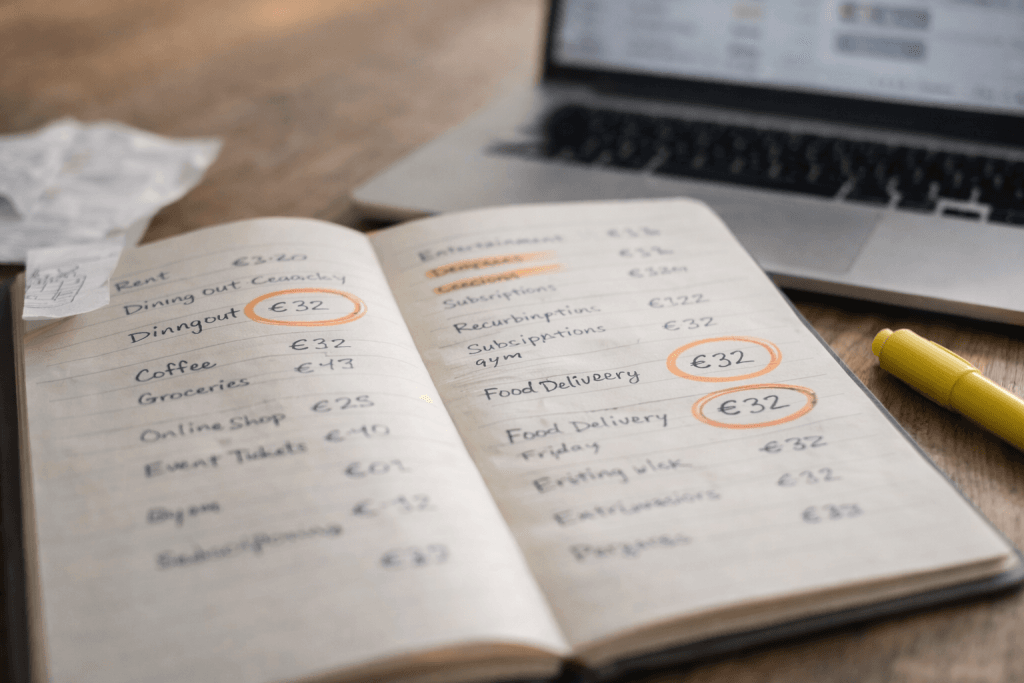
Use whatever method works best for you. You might prefer your online banking history, a spreadsheet, a notebook, a budgeting app, or the free AVM Spending Plan template. The specific tool isn’t important. Consistency is. One of the biggest mistakes people make at this stage is trying to change their spending immediately. Resist that temptation. Right now, your only job is to observe.
Approach your finances with curiosity rather than criticism. Think of yourself as a researcher collecting information instead of someone trying to solve a problem. The more accurately you capture your normal spending habits, the more valuable your analysis will be. Remember, you’re not trying to create the perfect month. You’re trying to understand your typical month.

Organize Your Expenses Using the Four AVM Spending Plan Categories
After tracking your income and expenses, you’ll probably have a long list of transactions. By itself, that list doesn’t tell you very much. The next step is to organize every expense into one of the four AVM Spending Plan categories. This helps you see how your money is being used and whether your spending supports both your current needs and your future goals.
Essential Spending
Essential Spending includes the expenses you need to maintain your daily life. These are the costs that keep your household running, such as housing, utilities, groceries, transportation, insurance, healthcare, and other basic living expenses. While the exact expenses will vary from person to person, this category covers the things you genuinely need before spending money elsewhere.
Savings
Savings are money you set aside for future expenses. This includes your emergency fund, sinking funds for planned purchases, and other short- to medium-term savings goals. The purpose of savings is to prepare for both expected and unexpected expenses without relying on debt or financial stress.
Investments
Investments are money you commit to your long-term financial future. This may include retirement accounts, index funds, ETFs, or other investments designed to grow over many years. Unlike savings, investments are generally intended to build long-term wealth rather than pay for upcoming expenses.
Lifestyle Spending
Lifestyle Spending includes the expenses that make life more enjoyable but aren’t essential for meeting your basic needs. This may include hobbies, holidays, eating out, entertainment, streaming services, beauty treatments, shopping, gifts, or other personal choices. Lifestyle Spending isn’t something you should feel guilty about. If you prefer a simple percentage-based starting point, read The 50/30/20 Rule Explained to see how income can be divided between essentials, lifestyle spending, savings, and investments.
A healthy financial life isn’t just about paying bills and saving money. It’s also about enjoying the life you’re working so hard to build. The goal is simply to make sure this category fits comfortably within your overall spending plan. After you’ve sorted your expenses, take a step back and look at the bigger picture. Don’t focus on individual purchases.
Instead, look at how much of your money goes into each category. You may discover that one category takes up much more of your income than you expected, while another receives very little attention. That’s exactly the kind of insight you’re looking for.
Look for Patterns, Not Problems
Once you’ve organized your expenses into categories, take a step back and look at the bigger picture. This is where financial analysis truly begins. It’s easy to focus on individual purchases and wonder whether they were good or bad. But a single purchase rarely tells you much about your financial habits.
Patterns do.
Instead of judging one shopping trip or one takeaway meal, look for the habits that repeat over time. These recurring patterns reveal far more about your financial life than any single transaction.
As you review your spending, ask yourself questions such as:
- Which category receives most of my money?
- Which expenses surprised me?
- Are there subscriptions or memberships I no longer use?
- Which purchases genuinely improve my quality of life?
- Which expenses provide only short-term satisfaction?
- Are there certain times of the month when I spend more than usual?
- Which expenses do I consistently underestimate?
You may also notice that some spending is connected to emotions rather than practical needs. Perhaps you spend more when you’re stressed, exhausted, bored, lonely, or celebrating something special. Every spending habit once solved a problem or met a need. Before deciding to change it, take time to understand what that need was. At this stage, don’t try to change those habits. Simply notice them. Understanding when and why they happen is far more valuable than judging yourself for making them.
If you’d like to better understand how your beliefs, emotions, and past experiences influence the way you manage money, continue with How to Change Your Money Mindset. Remember, you’re not looking for problems. You’re looking for patterns. And every pattern you discover gives you a better understanding of your financial life.
Does Your Spending Reflect What Matters Most to You?
By now, you’ve taken an honest look at your finances. You know how much money comes into your household, where it goes, and which spending patterns shape your financial life.
Now ask yourself one final question before moving on:
Does the way I spend my money reflect what matters most to me?
This isn’t about finding the “right” answer. It’s about understanding whether your daily financial choices support the life you’re trying to build. For example, you may say that financial security is important, yet save very little each month. You may dream of travelling, changing careers, improving your health, or retiring comfortably one day, while most of your money goes toward things that bring only short-term satisfaction.
That doesn’t mean you’ve failed. It simply means there’s a gap between your intentions and your current habits. Recognizing that gap isn’t something to feel guilty about. It’s one of the most valuable outcomes of financial analysis. Because once you understand where your money is going—and why—you can begin making intentional decisions that better support the future you want to create.
Questions to Help You Reflect on Your Financial Picture
Before moving on to the next stage of the AVM Spending Plan, take a few moments to reflect on what you’ve learned. You don’t need perfect answers. Honest answers are much more valuable.
Ask yourself:
- What surprised me most about my finances?
- Which spending habits support my wellbeing?
- Which habits no longer serve me?
- Which expenses bring genuine value to my life?
- Where do I feel the most financial stress?
- Which spending patterns would I like to understand better?
- What is one insight I’ll take with me into the next step?
These questions aren’t meant to judge your past decisions. They’re meant to help you better understand your present reality because meaningful change always begins with awareness.
You’re Ready for the Next Step
Taking an honest look at your finances may not feel exciting, but it’s one of the most valuable things you can do for your future. You now have something many people never achieve—a clear understanding of your current financial situation. You know how much money comes into your household, where it goes, how your expenses are distributed, and which spending patterns influence your financial life.
That’s a strong foundation. Without it, financial decisions are often based on assumptions, emotions, or guesswork. With that clarity, you can move forward with confidence because you understand your starting point. The next stage of the AVM Spending Plan isn’t about looking back. It’s about looking ahead. In Visualize Your Financial Future, you’ll use everything you’ve learned here to define your financial priorities, set meaningful goals, and create a clear direction for your money. When you know where you are and where you want to go, every financial decision becomes easier.
Key Takeaways
- Financial analysis is the foundation of every successful spending plan.
- Start by understanding your actual monthly income.
- Track your expenses before trying to change them.
- Organize your spending into the four AVM Spending Plan categories.
- Look for patterns instead of judging individual purchases.
- Notice how your financial choices align with what matters most to you.
- Clarity is the first step toward lasting financial change.
FAQ: Analyze Your Finances
Review your finances once a month. Regular check-ins help you spot changes early and make small adjustments before they become bigger problems.
One month is a good place to start, but reviewing the past three months usually gives you a more complete picture because it includes recurring and irregular expenses.
No. A spreadsheet, notebook, banking app, or the free AVM Spending Plan template can all work. The best tool is the one you’ll use consistently.
Analyzing your finances helps you understand your current financial situation.
Creating a spending plan is the next step, where you decide how you want to use your money based on what you’ve learned.
Ready to Take the Next Step?
Now that you understand your current financial situation, it’s time to decide where you want your money to take you. Continue with Visualize Your Financial Future to define your financial priorities, set meaningful goals, and create a clear direction for your money. If you’d like practical guidance as you work through each step, download the free AVM Spending Plan spreadsheet. It will help you organize your income and expenses using the same four-category system explained in this article.

