
The 50/30/20 rule is a simple guideline for dividing your monthly take-home income into three broad categories: 50% for Essential Spending, 30% for Lifestyle Spending, and 20% for Savings and Investments. It can give you a quick picture of how your money is distributed and help you consider whether your current spending supports both your life today and your financial future. However, these percentages are not a test you have to pass, and they are not realistic for every woman in every stage of life.
If you are supporting a family on one income, rebuilding after divorce, managing high housing costs, paying for health care, or living on a limited income, your Essential Spending may take 60%, 70%, or even 80% of your income. That does not automatically mean you are managing your money badly. It means your current financial reality looks different from the standard formula. Your starting point might be 70/20/10 rather than 50/30/20. Instead of forcing yourself to reach the recommended percentages immediately, you might first work toward 68/20/12 and later toward 65/20/15. Even a small shift can create more room for Savings and Investments.
The purpose of the 50/30/20 rule is not to make your life fit three percentages. Its purpose is to help you see how your income is currently divided and decide what a more supportive balance could look like for you. This is why the rule works best as one practical tool within the AVM Spending Plan. You first Analyze your current percentages without judgment, Visualize a realistic balance that reflects your needs and priorities, and then Modify your spending gradually.
This order matters because lasting financial change begins with understanding your real situation—not with imposing an ideal formula on a life that may already feel financially stretched. If you need the complete framework before working with percentages, begin with The AVM Spending Plan. It will help you create a financial structure that reflects both your present responsibilities and the future you want to build.
Key Takeaways
- The 50/30/20 rule divides your monthly net income into approximately 50% for Essential Spending, 30% for Lifestyle Spending, and 20% for Savings and Investments.
- The calculation is based on net income—the money you actually receive after taxes and other required deductions.
- The percentages are starting points, not fixed requirements. Your current financial reality may look more like 60/25/15 or 70/20/10.
- Having more than 50% in Essential Spending does not automatically mean that you are managing your money poorly. Housing costs, one income, health expenses, family responsibilities, divorce, or a limited income can significantly affect your percentages.
- The full 30% allocated to Lifestyle Spending does not need to be spent. You can redirect part of it toward Savings and Investments when that better supports your priorities.
- Savings and Investments may include emergency savings, sinking funds, planned future expenses, additional debt repayment, retirement contributions, and long-term investments.
- The AVM Method helps you apply the guideline realistically: Analyze your current percentages, Visualize a more supportive balance, and Modify your spending gradually.
- A small shift is still meaningful progress. Moving from 70/20/10 to 68/20/12 may be more realistic and sustainable than trying to reach 50/30/20 immediately.
What Is the 50/30/20 Rule?
The 50/30/20 rule is a money-management guideline based on your monthly net income—the money you actually receive after taxes and other required deductions.
It divides that income into three categories:
• 50% for Essential Spending
• 30% for Lifestyle Spending
• 20% for Savings and Investments
Essential Spending includes the costs required to maintain a safe and stable daily life, such as housing, groceries, utilities, necessary transportation, insurance, health care, and other essential financial obligations. Lifestyle Spending includes flexible expenses that support enjoyment, comfort, self-expression, and quality of life, such as dining out, travel, hobbies, entertainment, non-essential clothing, and additional personal services. Savings and Investments include money directed toward emergency savings, sinking funds, planned future expenses, additional debt repayment, retirement, and long-term financial growth.
The Consumer Financial Protection Bureau presents the 50/30/20 structure as a general rule of thumb and recognizes that common spending guidelines can be difficult to apply to every personal financial situation. The percentages are therefore best treated as reference points. They help you compare what your life costs today with how much you are able to direct toward enjoyment, financial security, and the future. Your actual percentages may be different, and they may change as your income, responsibilities, priorities, and stage of life change.
How the 50/30/20 Categories Work
The 50/30/20 rule becomes useful only when you understand what belongs in each category. Some expenses are easy to classify, while others depend on the role they play in your life. A car, for example, may be essential if you need it to travel to work or care for your family. Choosing a more expensive model for additional comfort may include an element of Lifestyle Spending. The same distinction can apply to housing, clothing, food, health, and many other everyday expenses. The goal is not to classify every purchase perfectly. It is to understand what your expenses provide and make more conscious decisions about where your income goes.
50% for Essential Spending
Essential Spending includes the expenses required to maintain a safe, stable, and functional daily life.
This category may include:
• Rent or mortgage payments
• Basic groceries and household necessities
• Electricity, heating, water, and essential internet or phone services
• Necessary transportation
• Insurance
• Essential health care and medication
• Minimum required debt payments
• Childcare needed for work
• Other unavoidable family responsibilities
Essential Spending is not exactly the same as fixed costs. Some essential expenses, such as rent or insurance, remain relatively stable each month. Others, including groceries, electricity, transportation, and health care, can change. The traditional 50/30/20 rule suggests keeping Essential Spending near 50% of your net income. For some women, this is realistic. For others—especially those living on one income, supporting children, rebuilding after divorce, or living in an expensive area—Essential Spending may take 60%, 70%, or more. A higher percentage is information, not evidence that you have failed. It shows how much of your income is currently required to keep your life functioning.
If Essential Spending takes most of your income, ask yourself:
• Which expenses are genuinely essential?
• Are any of these costs temporary?
• Could any contract, service, or recurring bill be reduced?
• Is the main problem high spending, insufficient income, or both?
• What is one realistic change that could create a little more room?
Do not cut expenses that protect your health, safety, ability to work, or your family’s basic stability simply to reach 50%. A spending plan should support your real life, not make it more fragile. Before setting a new percentage, Analyze Your Spending Habits and calculate how much of your current income already goes toward Essential Spending. This gives you an honest starting point for any future adjustment.
30% for Lifestyle Spending
Lifestyle Spending includes flexible expenses that are not required for basic stability but contribute to enjoyment, comfort, self-expression, connection, and quality of life.
This category may include:
• Dining out and takeaway meals
• Entertainment and subscriptions
• Travel and holidays
• Hobbies and leisure activities
• Non-essential clothing and beauty purchases
• Gifts beyond essential obligations
• Optional fitness memberships and wellness services
• Home décor and non-essential household purchases
• Upgraded products, services, or experiences
The traditional guideline allows up to 30% of net income for Lifestyle Spending. However, this is not an amount you are expected to spend every month. Lifestyle Spending is not automatically wasteful. Enjoyment, hobbies, social connection, rest, and personal style can support your well-being and help you create a life that feels meaningful.
The purpose of reviewing this category is not to remove everything that makes life pleasurable. It is to notice whether your flexible spending reflects what genuinely matters to you. Some Lifestyle Spending provides lasting value. Other purchases may happen automatically or be influenced by stress, boredom, loneliness, social pressure, or the temporary desire to feel better.
Ask yourself:
• Which expenses genuinely improve my life?
• Which activities help me feel connected, restored, or more like myself?
• Which purchases give me only brief relief or satisfaction?
• Am I paying for services or subscriptions I rarely use?
• Does my Lifestyle Spending reflect my values and current priorities?
A woman rebuilding her finances may temporarily allocate 10%, 15%, or 20% to Lifestyle Spending and direct more toward Savings and Investments. Another woman with lower Essential Spending may comfortably use the full 30%. Neither choice is automatically right or wrong. The important question is whether the percentage supports both your present well-being and your future security.
If you decide to reduce Lifestyle Spending, begin with expenses that bring little value rather than immediately removing the activities and experiences you care about most. A smaller, intentional category is more sustainable than a restrictive plan that leaves no room for pleasure, rest, or connection. Visualize Your Financial Future can help you decide which experiences deserve space in your spending plan—and which expenses no longer support the life you want to build.
20% for Savings and Investments
The final 20% of the traditional rule is intended to strengthen your financial security and support your future.
Savings and Investments may include:
• A starter emergency fund
• A larger emergency fund
• Sinking funds for planned expenses
• Car repairs and home maintenance
• Annual bills and insurance payments
• Health-related expenses
• Education or other future goals
• Additional debt repayment
• Retirement contributions
• Long-term investments
An emergency fund helps you manage unexpected and necessary expenses or a temporary loss of income. A sinking fund helps you prepare gradually for an expense you know is likely to occur, such as car maintenance, an annual bill, a home repair, or a planned purchase. Your first savings goal does not need to be large. If setting aside 20% is not currently possible, begin with a smaller amount that could help you manage one unexpected expense without relying on new debt. Over time, you may work toward a larger safety net based on several months of your Essential Spending.
Debt repayment can also be included in this category. Minimum required debt payments remain part of Essential Spending because they are current financial obligations. Additional payments made to reduce debt faster belong within Savings and Investments because they strengthen your future financial position. The final 20% may also support retirement and other long-term investments. Even small, regular contributions can help you begin preparing for your future when your current financial situation allows it. You do not need to direct the full 20% toward every goal at the same time. Your priorities may change according to your financial circumstances.
You might focus first on:
• Building a small emergency fund
• Preparing for a known future expense
• Reducing debt
• Strengthening retirement savings
• Creating a balance between shorter-term security and long-term growth
If you can currently direct only 2%, 5%, or 10% toward Savings and Investments, begin there. The first realistic goal is not to reach a perfect percentage. It is to create regular movement toward greater financial security. As your income increases, a debt is repaid, or an Essential Spending expense decreases, you can gradually increase this percentage.
How to Calculate the 50/30/20 Rule
To calculate your 50/30/20 guideline, begin with your monthly net income. This is the amount you actually receive after taxes and other required deductions.
If your monthly net income is €2,500, calculate each category like this:
• Essential Spending: €2,500 × 0.50 = €1,250
• Lifestyle Spending: €2,500 × 0.30 = €750
• Savings and Investments: €2,500 × 0.20 = €500
This calculation shows what the traditional percentages would look like at your income level. It does not mean that your actual spending must immediately match these amounts.
If Your Income Changes Each Month
If your income is irregular, calculate the average of your net income from the previous three to six months. This can give you a useful overview, but an average may still be too optimistic if your income changes significantly. For a safer spending plan, you can base your Essential Spending on a lower-income month. When you earn more, you can direct part of the additional income toward Savings and Investments or planned Lifestyle Spending. The goal is to avoid creating a monthly plan that only works during your highest-income months.
Calculate Your Current Percentages
Before deciding what your percentages should be, calculate what they are now.
Use this formula:
Category amount ÷ monthly net income × 100 = current percentage
For example, if your monthly net income is €2,500 and your Essential Spending is €1,625:
€1,625 ÷ €2,500 × 100 = 65%
Your Essential Spending currently represents 65% of your net income.
Complete the same calculation for:
• Essential Spending
• Lifestyle Spending
• Savings and Investments
Your current spending plan might look like this:
• Essential Spending: 65%
• Lifestyle Spending: 20%
• Savings and Investments: 15%
This 65/20/15 structure is not necessarily wrong. It simply shows how your income is currently divided. Once you know your actual percentages, you can compare them with the traditional guideline and decide whether one category needs attention. Record your income and category totals in the AVM Spending Plan Worksheet. Seeing your real percentages gives you an honest starting point for creating a spending plan that reflects both your present responsibilities and your future priorities.
How the 50/30/20 Rule Fits into the AVM Spending Plan
The 50/30/20 rule gives you a simple reference point, but it does not tell you whether the percentages are realistic for your life, what you want your money to support, or how to change your current spending without becoming overwhelmed. This is where the AVM Spending Plan goes further. The AVM Method works because it follows the natural order of lasting change. You first understand your present financial reality, then decide where you want to go, and only after that begin modifying your spending and financial habits.
Analyze Your Current Percentages
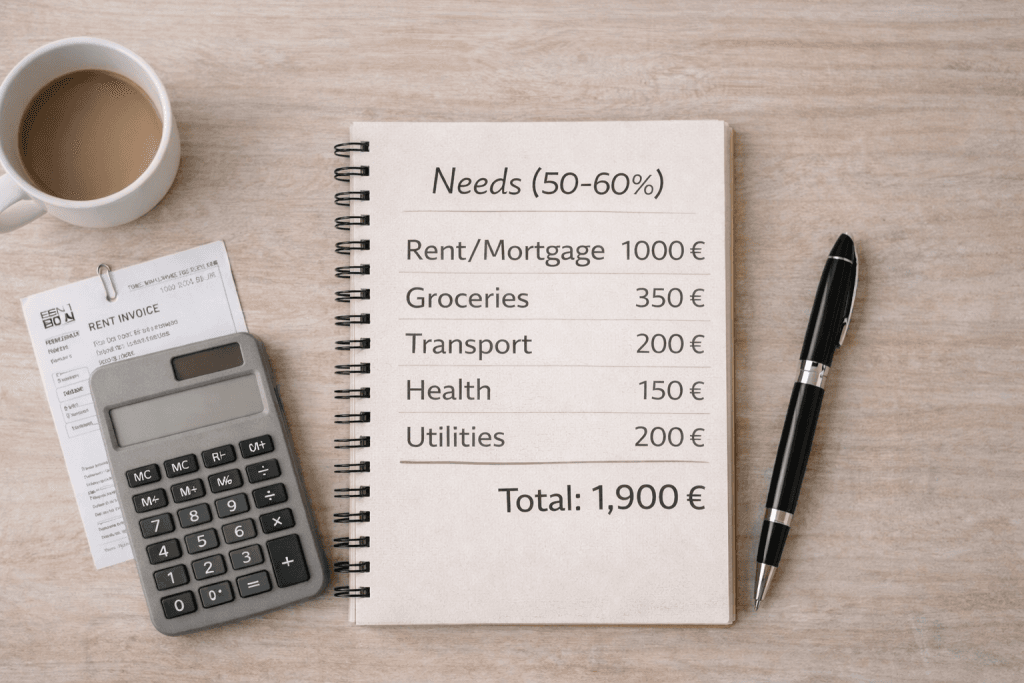
Begin by calculating how much of your net income currently goes toward:
• Essential Spending
• Lifestyle Spending
• Savings and Investments
Do not adjust the numbers yet. First, look at them with honesty and curiosity. You may discover that your Essential Spending takes 70% of your income, while only 10% goes toward Savings and Investments. You may also notice that Lifestyle Spending is higher than expected or that irregular expenses repeatedly interrupt your progress. These numbers do not tell you whether you are good or bad with money. They show what is happening now.
During the Analyze phase, ask yourself:
• Which category takes the largest part of my income?
• Which expenses are essential, and which are flexible?
• Am I regularly surprised by predictable expenses?
• Is my main difficulty overspending, high Essential Spending, insufficient income, or a combination of these?
• What emotions or habits influence the way I use money?
If you have not yet reviewed your real financial patterns, begin with Analyze Spending Habits before setting new percentages.
Visualize a More Supportive Balance
Once you understand your current percentages, decide what a more supportive distribution could look like. Your goal does not have to be 50/30/20. It needs to be realistic enough to follow while gradually moving you toward greater security and choice.
For example, your current percentages may be:
• 70% Essential Spending
• 20% Lifestyle Spending
• 10% Savings and Investments
Your first realistic target might be:
• 68% Essential Spending
• 20% Lifestyle Spending
• 12% Savings and Investments
This may appear to be a small change, but it increases the amount directed toward your future without creating a spending plan that is impossible to maintain.
During the Visualize phase, ask yourself:
• How much would I like to direct toward Savings and Investments?
• Which Lifestyle Spending genuinely improves my life?
• Which percentage would I most like to change over the next three to six months?
• What would a realistic—not idealized—financial balance look like for me?
• What would help me feel more financially secure?
Visualize Your Financial Future can help you connect your percentages with the security, freedom, and quality of life you want to create.
Modify One Percentage at a Time
After identifying your starting point and realistic target, choose one small adjustment.
You might:
• Reduce one recurring Lifestyle Spending expense.
• Redirect a small amount toward Savings and Investments after payday.
• Prepare a sinking fund for a predictable annual expense.
• Increase the percentage directed toward Savings and Investments by 1%.
• Review an Essential Spending contract or service.
• Explore a realistic way to increase your income.
Avoid trying to change every category at once. A spending plan is more sustainable when you make one manageable adjustment, observe how it works, and then decide on the next step. Modify Your Financial Habits will help you turn your chosen percentages into small, repeatable actions. The 50/30/20 rule gives you a picture. The AVM Spending Plan gives you a process for using that picture. Analyze shows you where you are, Visualize helps you choose your direction, and Modify helps you move toward it gradually.
When the 50/30/20 Rule Does Not Fit Your Real Life
The traditional percentages can be helpful when your income comfortably covers your Essential Spending. However, the formula becomes much harder to follow when maintaining basic stability already takes most of what you earn.
The rule may not fit your current reality if:
• You support your family on one income.
• You are rebuilding financially after divorce or separation.
• Your housing costs are high compared with your income.
• You have significant health-related expenses.
• You are caring for children or other family members.
• Your income is low, irregular, or temporarily reduced.
• You are repaying debt.
• You are recovering from unemployment, burnout, illness, or another major life transition.
Over the years, I have seen many women blame themselves for not being able to follow standard financial rules when the real problem was that their income could barely cover housing, family responsibilities, health costs, and other essential needs. A percentage cannot fully reflect the pressure of real life. It can only help you see your starting point more clearly. In these circumstances, your spending plan may look very different from 50/30/20.
If your income is currently needed entirely for basic living costs and a small amount of flexible spending, it might look like:
• 85% Essential Spending
• 15% Lifestyle Spending
• 0% Savings and Investments
Another woman may currently have:
• 70% Essential Spending
• 20% Lifestyle Spending
• 10% Savings and Investments
Or:
• 65% Essential Spending
• 20% Lifestyle Spending
• 15% Savings and Investments
A woman with lower Essential Spending may be able to use:
• 45% Essential Spending
• 25% Lifestyle Spending
• 30% Savings and Investments
None of these examples is a new universal rule. They show how the basic guideline can be adapted to a woman’s income, responsibilities, priorities, and stage of life. If your current Savings and Investments percentage is 0%, this does not mean you have failed. It may mean that your income is currently fully needed to cover Essential Spending and maintain a basic quality of life. Your first goal does not have to be reaching 20%. It may simply be creating enough room to move from 0% to 1%. That first small percentage can become the beginning of greater financial security.
When Essential Spending Is Higher Than 50%
If Essential Spending takes 60%, 70%, or even 80% of your income, the numbers are giving you information—not a failing grade. First, identify why the percentage is high.
You may be managing:
• Housing costs that cannot be reduced immediately
• One income supporting several people
• Essential childcare or transportation costs
• Medical treatment or medication
• Minimum debt payments
• A temporary reduction in income
• A wider gap between living costs and earnings
Reducing Lifestyle Spending may create some room, but it will not always solve a structural income problem. If Essential Spending remains high after a careful review, the longer-term solution may also involve increasing your income or changing a major expense when that becomes possible. Until then, focus on protecting stability and creating the smallest realistic amount for Savings and Investments.
When You Cannot Reach 20% for Savings and Investments
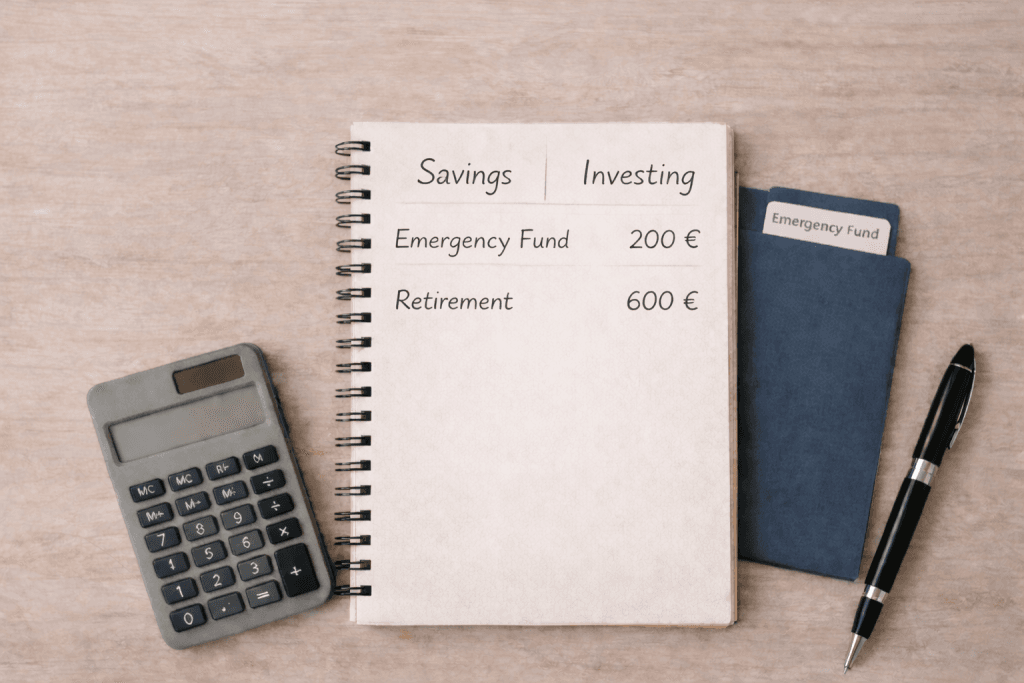
If you currently cannot direct anything toward Savings and Investments—or can direct only 5% or 10%—begin with your real situation rather than forcing the full 20%. If your current percentage is 0%, your first step may be protecting your stability and looking for the first realistic opportunity to move toward 1%.
Your progress might look like this:
• Current position: 70/20/10
• First realistic target: 68/20/12
• Later target: 65/20/15
The order is always:
Essential Spending / Lifestyle Spending / Savings and Investments
A gradual shift allows you to make progress without creating a spending plan that collapses after one difficult month.
When 30% for Lifestyle Spending Does Not Fit
The 30% allocated to Lifestyle Spending is an allowance, not a spending target. You do not need to spend the full amount simply because the traditional formula includes it. During a rebuilding period, you may choose to keep Lifestyle Spending at 10%, 15%, or 20% so that more can go toward Savings and Investments. However, reducing Lifestyle Spending to zero is not always realistic or sustainable. A plan with no room for rest, hobbies, social connection, personal care, or small pleasures can begin to feel like punishment.
The aim is to choose an amount that respects both your financial limits and your need to live a meaningful life now. Your percentages should reflect your real situation while helping you move gradually toward greater stability. The goal is not to prove that you can follow a formula. The goal is to create a spending plan that protects your present and strengthens your future.
Real-Life Examples of an Adapted 50/30/20 Rule
The following examples show how the 50/30/20 guideline can look different depending on a woman’s income, responsibilities, and current stage of life. The first example follows the traditional percentages. The second shows how the same principle can be adapted during a period of financial rebuilding. These examples are not formulas you need to copy. Their purpose is to help you see how your percentages can be adjusted without losing the balance between present needs, quality of life, and future security.
Example 1 – Emily: Stable Income and Balanced Spending
Emily is 47 and earns a stable net income of €3,500 per month. Her housing and other Essential Spending are manageable, she has no high-interest debt, and she has already started building financial security. Her income allows her to use the traditional 50/30/20 structure.
| Category | Percentage | Amount | Examples |
| Essential Spending | 50% | €1,750 | Housing, groceries, utilities, insurance, transportation, and health care |
| Lifestyle Spending | 30% | €1,050 | Travel, hobbies, dining out, clothing, wellness, and entertainment |
| Savings and Investments | 20% | €700 | Emergency savings, planned expenses, retirement, and long-term financial goals |
Emily does not need to use the full 30% for Lifestyle Spending every month. If she spends less, she can direct the remaining amount toward Savings and Investments. Because her basic finances are stable, her main task is to review her plan regularly and make sure her spending continues to reflect her values and long-term goals.
Example 2 – Laura: Rebuilding After Divorce on One Income
Laura is 45 and has recently gone through a divorce. She now supports herself and her child on a net income of €1,800 per month. Her housing, utilities, groceries, transportation, and other necessary expenses take more than 50% of her income. Trying to force these costs into the traditional formula would not make them disappear. It would only make her feel that she was failing.
Her current spending plan looks like this:
| Category | Percentage | Amount | Examples |
| Essential Spending | 65% | €1,170 | Housing, groceries, utilities, transportation, insurance, and essential family costs |
| Lifestyle Spending | 20% | €360 | Low-cost activities, occasional meals out, personal care, and time with her child |
| Savings and Investments | 15% | €270 | Emergency savings, planned expenses, additional debt repayment, and long-term financial goals |
Laura’s adapted structure is 65/20/15 rather than 50/30/20. Her first goal is not to reduce Essential Spending to 50%. That may not be possible while her income, family responsibilities, and housing situation remain the same. Instead, she focuses on maintaining stability and consistently directing part of her income toward Savings and Investments.
If her income increases or one of her Essential Spending expenses decreases, her next target might be:
• 63% Essential Spending
• 20% Lifestyle Spending
• 17% Savings and Investments
This is a small adjustment, but it moves her toward greater security without making her current life unnecessarily restrictive.
What These Examples Show
Emily and Laura are both using the principle behind the 50/30/20 rule, even though their percentages look different. Emily can use the traditional formula because her income and Essential Spending allow it. Laura needs an adapted version that protects her present stability while she rebuilds her financial foundation.
The important question is not:
“Do my percentages match 50/30/20 perfectly?”
A more useful question is:
“Do my current percentages reflect my real situation, and what is the next realistic adjustment I can make?”
That question turns the 50/30/20 rule from a rigid formula into a practical tool for conscious financial change.
Common Mistakes When Using the 50/30/20 Rule
The 50/30/20 rule is simple, but that does not mean every expense is easy to classify or every percentage is easy to reach. Most problems arise when the guideline is treated as a strict formula rather than a tool for understanding your money.
Using Gross Income Instead of Net Income
The 50/30/20 calculation is based on your monthly net income—the amount you actually receive after taxes and other required deductions. Using gross income makes it appear that more money is available than you can actually spend, save, or invest. This creates unrealistic category amounts from the beginning.
Treating the Percentages as Fixed Requirements
The most common mistake is believing that your spending plan must immediately match 50/30/20. If Essential Spending takes 70% of your income, writing 50% in a spreadsheet will not change your housing costs, family responsibilities, or income. Begin with your actual percentages and choose a realistic next target. The numbers should help you understand your situation, not make you feel ashamed of it.
Confusing Essential Spending with Lifestyle Spending
Some expenses can belong to different categories depending on the purpose they serve. Basic groceries belong in Essential Spending. Restaurant meals usually belong in Lifestyle Spending. Necessary clothing is Essential Spending, while additional fashion purchases may be Lifestyle Spending. Transportation required for work is Essential Spending. Paying more for additional comfort, convenience, or status may include Lifestyle Spending.
Ask yourself:
• Do I need this expense to maintain basic stability or fulfill an essential responsibility?
• Am I choosing a more expensive version because it adds pleasure, comfort, or convenience?
• Does this expense support a need, a lifestyle preference, or both?
The purpose is not to judge the purchase. It is to classify it honestly.
Forgetting About Debt Repayment
Minimum required debt payments belong in Essential Spending because they are current financial obligations. Additional payments made to reduce debt faster belong within Savings and Investments because they strengthen your future financial position. This distinction prevents you from counting the same payment twice and gives you a more accurate picture of your spending plan.
Ignoring Irregular but Predictable Expenses
Annual insurance, car maintenance, school expenses, holidays, gifts, home repairs, and health-related costs may not appear every month, but they are not necessarily unexpected. If you ignore them, they can disrupt your spending plan whenever they arise. Estimate the annual amount, divide it by twelve, and include the monthly amount within Savings and Investments. Gradually preparing for these costs through sinking funds can make your spending plan more stable.
Cutting Small Pleasures When Income Is the Main Problem
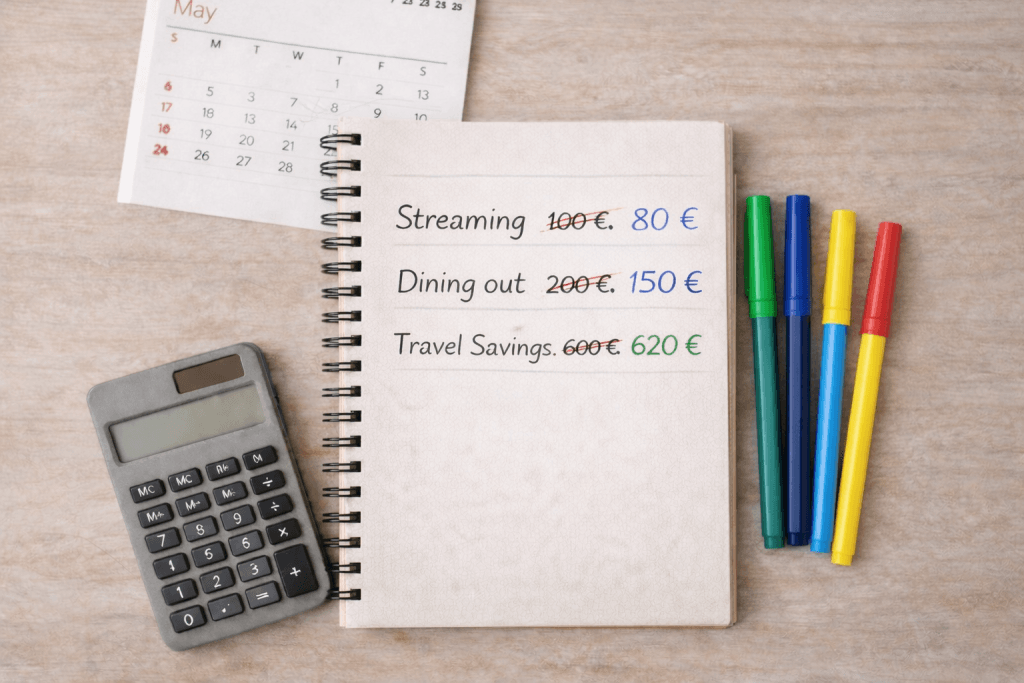
Reducing Lifestyle Spending can help, but small purchases are not always the reason your percentages feel impossible. If Essential Spending already takes most of your income, removing every coffee, hobby, or low-cost activity may create deprivation without solving the underlying problem.
Review flexible expenses honestly, but also ask whether your income is sufficient to cover your essential responsibilities and financial goals. If the main problem is insufficient income rather than uncontrolled spending, Earn More Money on the Side can help you explore realistic ways to create additional financial space.
Trying to Change Every Category at Once
A complete financial reset may feel productive for a few days, but drastic changes are difficult to maintain. Choose one adjustment first. You might reduce one recurring expense, increase the amount directed toward Savings and Investments by 1%, or prepare for one annual bill. Once that change becomes stable, choose the next one. The AVM Method works through awareness, direction, and gradual modification. You do not need to transform your entire financial life in one month to begin making meaningful progress.
Why the 50/30/20 Rule Can Help—and Where It Falls Short
The strength of the 50/30/20 rule is its simplicity. Instead of tracking dozens of small categories, you begin with a clear overview of how your income supports your present life and future security. However, simplicity also has limits. The rule can show you how your income is divided, but it cannot fully explain why your percentages look the way they do or tell you exactly what you should change.
Why the 50/30/20 Rule Can Help
The rule can give you:
• Clarity about how much of your income goes toward Essential Spending
• Awareness of how much you use for Lifestyle Spending
• A visible place for Savings and Investments
• A simple way to compare your current and desired percentages
• A structure that is easy to review each month
It can be especially useful if you have never organized your income into broad categories before. Seeing the percentages may reveal that Essential Spending takes more than expected, Lifestyle Spending has gradually increased, or very little income is being directed toward Savings and Investments. The rule also helps you balance different needs. Essential Spending protects your life today. Lifestyle Spending allows room for enjoyment, identity, connection, and meaningful experiences. Savings and Investments support financial security and future goals.
Where the 50/30/20 Rule Falls Short
The rule does not fully consider:
• The cost of living where you live
• Whether one income supports several people
• Financial changes after divorce, illness, unemployment, or burnout
• The difference between a low income and uncontrolled spending
• Your current debt and financial obligations
• Whether you already have emergency savings
• Your age, retirement needs, and long-term goals
• Irregular income and changing expenses
• Emotional spending or financial avoidance
• The habits required to maintain new percentages
Two women can earn the same income and still need very different spending plans. One may have low housing costs and no dependents. The other may support children, pay high rent, manage health expenses, or rebuild after divorce. Giving both women the same percentages would not create the same level of security.
Why the AVM Spending Plan Goes Further
The 50/30/20 rule gives you a structure. The AVM Spending Plan helps you personalize and use that structure. Analyze helps you understand your actual income, expenses, percentages, habits, and financial pressures. Visualize helps you decide what you want your Essential Spending, Lifestyle Spending, and Savings and Investments to support. Modify helps you turn your desired percentages into small, sustainable financial actions.
This is why the AVM Spending Plan does not require every woman to follow the same formula. It uses the 50/30/20 rule as a reference point while keeping your real circumstances, priorities, and capacity at the center of the process. A financial guideline is helpful when it increases clarity. It should never replace your understanding of your own life.
FAQ: The 50/30/20 Rule Explained
The 50/30/20 rule is a money-management guideline that divides monthly net income into approximately 50% for Essential Spending, 30% for Lifestyle Spending, and 20% for Savings and Investments. The percentages are starting points and can be adapted to your financial situation.
The rule uses net income—the money you actually receive after taxes and other required deductions. Using gross income would create category amounts based on money that is not available for spending, saving, or investing.
Begin with your actual percentage rather than forcing your expenses into the standard formula. High housing costs, one income, family responsibilities, health expenses, or limited income may make 50% unrealistic. Your first goal might be to move gradually from 70% to 68%, not immediately from 70% to 50%.
Savings and Investments may include an emergency fund, sinking funds, planned future expenses, additional debt repayment, retirement contributions, and long-term investments. The specific priorities within this category depend on your current financial needs and goals.
Yes. Minimum required debt payments belong in Essential Spending because they are current financial obligations. Additional payments made to reduce debt faster belong within Savings and Investments because they strengthen your future financial position.
The traditional percentages may not be realistic when Essential Spending already takes most of your income. You can still use the rule to understand your current distribution and create a gradual target. If your current percentage is 0%, begin by protecting your basic stability and work toward the first realistic 1% when your circumstances allow. Even a small amount can become a meaningful beginning.
Yes. Your spending plan might be 60/25/15, 65/20/15, or 70/20/10, depending on your income, responsibilities, and current priorities. These are not alternative universal formulas. They are examples of how the guideline can be adapted to real life.
The 50/30/20 rule provides a simple percentage guideline. The AVM Spending Plan provides a complete process: Analyze your current financial reality, Visualize a more supportive balance, and Modify your spending through small, sustainable actions.
Final Thoughts: Use the 50/30/20 Rule as a Starting Point
The 50/30/20 rule can help you understand how your income is divided between Essential Spending, Lifestyle Spending, and Savings and Investments. Its greatest value is not in the exact percentages but in the financial picture it helps you see. Your current spending plan may not look like 50/30/20. It may be 60/25/15, 65/20/15, 70/20/10, or 85/15/0. These percentages are not evidence that you are succeeding or failing. They reflect your current income, expenses, responsibilities, priorities, and stage of life.
Begin by calculating your real percentages. Then decide what a more supportive balance could look like—not in an ideal future with no financial pressure, but in the life you are living now. Your first adjustment may be small. You might move 1% toward Savings and Investments, prepare for one predictable expense, reduce one recurring Lifestyle Spending cost, or review an Essential Spending bill. Small changes matter because they create movement without making your spending plan impossible to maintain.
The purpose of the 50/30/20 rule is not to make your life fit three fixed percentages. Its purpose is to help you understand where your money goes and choose where you want more of it to go in the future. With the AVM Spending Plan, you do this in a realistic order: Analyze your current financial situation, Visualize a balance that supports your life and goals, and Modify your percentages through manageable steps. You do not need perfect numbers. You need an honest starting point, a realistic direction, and one next step you can continue.
Create Your Own 50/30/20 Plan
You do not need to calculate every percentage or organize your financial life from a blank page. Download the free AVM Spending Plan and use the Excel worksheet to record your monthly net income, organize your expenses, and compare your current financial distribution with the traditional 50/30/20 guideline.
The worksheet will help you:
• See where your money currently goes
• Calculate your real spending percentages
• Identify which category needs the most attention
• Create a realistic target for your current situation
• Review and adjust your spending plan over time
Your first version does not need to be perfect. Begin with your real numbers, choose one small adjustment, and allow your spending plan to develop as your circumstances change.
Download your free AVM Spending Plan and create a financial structure that fits your real life.

Download the Worksheet here
