
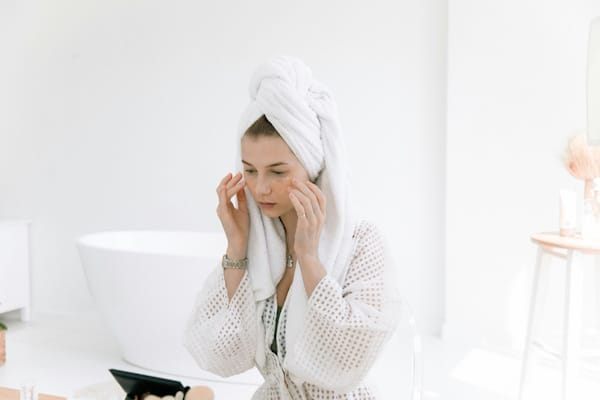
A self-care routine at home can help you feel more supported after 40, especially when your energy, body, emotions, and daily responsibilities begin to change. Many women over 40 do not stop caring for themselves. They slowly stop making themselves part of the plan.
Work gets done.
Meals get made.
Messages get answered.
Laundry gets folded.
Appointments are remembered.
Other people’s needs are noticed.
But your own care becomes something you fit in later. And later keeps moving.
Your hair waits until it feels urgent.
Your skin feels dry, but you ignore it.
Your meals become random.
Your body feels tense.
Your sleep gets pushed back.
Your clothes are chosen quickly, not intentionally.
You keep functioning, but you do not feel fully supported inside your own day.
That is where a simple self-care routine at home after 40 matters.
Not as decoration.
Not as luxury.
Not as another performance.
As maintenance.
A self-care routine at home after 40 helps you rebuild energy, confidence, and daily stability through small habits you can actually repeat.
This article is part of the Health, Fitness, Diet & Style pillar in the Change To Be Free. If you want the full overview of this pillar, start with the cornerstone article on Health, Fitness, Diet & Style: How to Rebuild Energy and Confidence After 40.
If food has been inconsistent, rushed, emotional, or connected to stress, read Analyzing Eating Habits After 40: Where to Start With Changes first.
If you already know you need a clearer direction for your body, energy, food, movement, rest, and style, read How to Build a Healthy Lifestyle Vision After 40.
Those articles help you Analyze and Visualize. This one helps you Modify. Because change does not become real because you understand it. It becomes real when your daily habits start supporting you.
Key Takeaways
- Self-care after 40 is not a luxury. It is basic maintenance that supports your energy, health, confidence, and emotional stability.
- A realistic self-care routine should work on ordinary busy days, not only when you have plenty of time and energy.
- Focus on small, repeatable habits around body care, food, hydration, movement, rest, emotional regulation, and personal style.
- Do not try to change everything at once. Choose a few habits that make daily life feel more supportive.
- Use the AVM Method to understand what is missing, decide how you want to feel, and build small habits that support that direction.
What Is a Self-Care Routine at Home After 40?
A self-care routine at home after 40 is a simple set of repeated habits that help you care for your body, energy, appearance, rest, food, and emotional steadiness inside your real life. The World Health Organization describes self-care as the ability of individuals, families, and communities to promote and maintain health, prevent disease, and cope with illness, with or without support from a health worker. Not an ideal life. Your real one.
The one with work.
Family.
Laundry.
Stress.
Hormonal changes.
Budget limits.
Tired evenings.
Busy mornings.
A body that may need more recovery than it used to.
Self-care after 40 is not only about feeling relaxed. It is about staying connected to yourself before your body has to get louder.
A supportive routine may include:
- drinking water before coffee
- washing your face before bed
- preparing one reliable breakfast
- stretching your back after work
- walking outside for ten minutes
- taking care of your hair before it feels neglected
- choosing clothes for tomorrow
- putting lotion on dry skin
- stopping house tasks at a chosen time
- going to bed earlier twice a week
- making the health appointment you keep postponing
This is not glamorous. It is practical. And for many women, practical self-care is exactly what has been missing.
Why Self-Care Feels Harder After 40
Self-care after 40 often becomes harder because life has been built around responsibility. You may be used to noticing everyone else first.
Children.
Partner.
Parents.
Clients.
Work.
Home.
Family needs.
Emotional tension.
Money pressure.
Schedules.
Your own needs become background noise.
You may tell yourself:
“I’ll do it later.”
“I just need to get through this week.”
“I don’t have time.”
“It’s not that important.”
“I’m too tired.”
“I’ll start properly on Monday.”
But basic care cannot always wait for the perfect week. Your body is living today. Your energy is being used today. Your confidence is being shaped today. This is why the routine must be simple. A self-care routine that only works on a calm Sunday is not strong enough. You need one that can survive a normal Tuesday.
Self-Care Is Not Selfish
Many women still carry guilt around self-care. Not always consciously. But it shows up in behavior. You rest only after everything is done.
You buy things for others more easily than for yourself.
You prepare meals for everyone else, then eat whatever is left.
You delay appointments.
You ignore symptoms.
You wear clothes that make you feel bad because replacing them feels unnecessary.
You treat tiredness as normal.
That is not responsibility. That is self-neglect dressed as responsibility. Self-care is not selfish when it helps you function with more stability, patience, energy, and dignity. A woman who never cares for herself does not become more loving. She becomes depleted.
And depletion eventually leaks into everything:
- mood
- food choices
- relationships
- patience
- work
- sleep
- confidence
- body image
- emotional regulation
Self-care is not about putting yourself above everyone else. It is about not removing yourself from your own life.
The AVM Method: How to Build a Self-Care Routine at Home
Inside the AVM Method™, you do not build a routine randomly.
You move through three steps:
Analyze.
Visualize.
Modify.
This article focuses on Modify, but the first two steps still matter. If you skip them, self-care easily becomes another list you abandon.
Analyze: What Is Currently Missing?
Before you create a routine, look honestly at your current pattern.
Ask yourself:
- What part of basic care do I keep postponing?
- When do I feel most neglected?
- What happens to my body when I am stressed?
- What happens to my food when I am tired?
- What happens to my skin, hair, posture, or clothes when life gets busy?
- What do I always do for others but rarely do for myself?
- Where am I being too harsh with myself?
- Where am I being too passive?
Do not use these answers to shame yourself. Use them to locate the real problem. Maybe you do not need a full wellness reset. Maybe you need a better evening routine. Maybe you need lunch. Maybe you need to stop scrolling in bed. Maybe you need to prepare tomorrow’s clothes. Maybe you need ten minutes outside. Maybe you need to stop waiting until exhaustion becomes the only reason you rest. That is Analyze. You look at what is actually happening.
Visualize: What Should Self-Care Help You Feel?
Self-care needs direction. Otherwise, you may copy someone else’s routine and wonder why it does not fit.
Ask yourself:
- Do I want more energy?
- Do I want calmer mornings?
- Do I want better sleep?
- Do I want steadier meals?
- Do I want more confidence in my body?
- Do I want to feel cleaner, fresher, more put together?
- Do I want my home to make basic care easier?
- Do I want less evening chaos?
- Do I want to feel like I matter again?
This is where your previous Healthy Lifestyle Vision becomes useful. Your self-care routine should support that vision. Not compete with it. If your vision is more energy, your routine may focus on food, hydration, sleep, and movement. If your vision is more body confidence, your routine may focus on skincare, hair care, clothing, posture, and movement. If your vision is calmer eating, your routine may include backup meals, a simple breakfast, and an evening reset. If your vision is better rest, your routine may include a stopping point, less phone use, and a calmer bedroom. The routine must serve your real direction.
Modify: Choose Small Habits You Can Repeat
Modify is where change becomes behavior. Not a plan. Not an intention. Behavior. This is where many women make the mistake of doing too much.
They create a routine that includes:
- morning journaling
- skincare
- yoga
- supplements
- green smoothie
- meal prep
- walking
- meditation
- dry brushing
- exercise
- reading
- evening routine
- perfect sleep schedule
Then real life happens. And the routine collapses. That does not mean you failed. It means the routine was too heavy.
The Modify phase asks a better question:
What is one small habit I can repeat this week?
Start there. Not with everything. One repeatable habit is more useful than ten impressive habits you abandon.
The 5 Areas of a Self-Care Routine at Home
A good self-care routine at home after 40 should support the whole woman. Not only her appearance. Not only her diet. Not only her mood.
These five areas work well inside the Health, Fitness, Diet & Style pillar:
- body care
- food and hydration
- movement
- rest and emotional regulation
- style and confidence
You do not need to work on all five at once. But you should understand them.
1. Body Care: Hair, Skin, Teeth, and Basic Maintenance
Body care is often the first thing women postpone when life gets full. Not because they do not care. Because they are tired.
Hair gets tied back.
Skin gets ignored.
Teeth are brushed quickly.
Body lotion waits.
Feet, hands, posture, and small discomforts are overlooked.
Appointments are delayed.
But body care sends a message. Not to other people. To you.
It says:
“I am still here.”
“My body matters.”
“I do not have to disappear inside responsibility.”
Start with basic maintenance. Not perfection.
If hair loss has been part of your stress or burnout story, you may also want to read How I Restored My Hair After Extreme Hair Loss.
Simple Body Care Habits
Choose one:
- wash your face every evening
- moisturize dry skin after showering
- brush and style your hair before the day starts
- prepare one simple hair care routine for the week
- take care of your feet once a week
- book a dental, skin, or medical check-up you have postponed
- stretch your neck and shoulders after work
- keep body care products visible and easy to use
Do not make this complicated. The goal is not to become someone with a perfect bathroom shelf. The goal is to stop treating your body like an emergency project. Self-care also includes how you present yourself to the world, so if your style no longer feels like you, read Personal Style After 40: How to Dress for the Woman You Are Becoming.

2. Food and Hydration: Feed Yourself Like You Matter
Food is one of the most basic forms of self-care. And one of the easiest to neglect. Many women over 40 cook for others, plan for others, shop for others, and still fail to properly feed themselves. That matters. If your eating habits are inconsistent, this connects directly to the Analyze article on Analyzing Eating Habits After 40. You cannot build energy on random food. You cannot expect emotional steadiness from a body that is underfed all day and overloaded at night. Self-care with food does not mean a strict diet.
It means:
- eating before you are starving
- having one reliable breakfast
- drinking enough water
- preparing simple meals
- adding protein and fibre where you can
- keeping backup food at home
- not treating your own meals as less important
The CDC notes that healthy eating, physical activity, sleep, and stress reduction all matter for health and weight management as people age. But do not turn that into pressure. Turn it into structure.
Simple Food and Hydration Habits
Choose one:
- drink one glass of water before coffee
- prepare breakfast the night before
- add protein to your first meal
- eat lunch sitting down
- prepare one backup meal for busy evenings
- keep soup, sauce, or cooked grains in the freezer
- cook double when you already cook
- stop skipping meals and calling it discipline
Food care does not need to be impressive. It needs to be repeatable.

3. Movement: Support Your Body Without Punishing It
Movement belongs in self-care because your body needs circulation, mobility, strength, and release. But after 40, movement should not feel like punishment. You are not here to attack your body into shape. You are here to help it carry your life better. The CDC says adults need at least 150 minutes of moderate-intensity aerobic activity each week and at least two days of muscle-strengthening activity.
That is useful as a health reference. But your starting point may be smaller. A ten-minute walk still counts as a return to your body. Stretching your back after sitting all day counts. Taking stairs when realistic counts. Walking outside after work instead of collapsing immediately into scrolling counts. You build from where you are. Not from where someone else performs fitness online.
Simple Movement Habits
Choose one:
- walk for 10 minutes after work
- stretch your neck and shoulders before bed
- do five minutes of mobility in the morning
- stand up between long sitting periods
- take a short walk after lunch
- try one gentle strength session this week
- use movement as a stress reset, not punishment
If movement has become a source of pressure, the next cluster article Fitness After 40: How to Choose Movement That Fits Your Real Life will go deeper. Here, movement is part of daily care. Simple. Realistic. Returnable.

4. Rest and Emotional Regulation: Stop Waiting Until You Collapse
Many women over 40 know how to keep going. They know how to push through. They know how to finish the work, handle the home, answer the message, support the family, and stay functional. But they do not always know how to stop. So the body starts stopping them.
Fatigue.
Tension.
Cravings.
Irritability.
Poor sleep.
Emotional eating.
Brain fog.
Low motivation.
A heavy mood.
Rest is not optional. The National Institute on Aging notes that older adults generally need about 7 to 9 hours of sleep each night. But rest is not only sleep. Rest also includes pauses.
Quiet.
Lower stimulation.
A slower evening.
A boundary.
Less screen time.
A moment before reacting.
Not starting another task at 21:30 because the house is never finished.
Emotional regulation is also self-care. Sometimes the most supportive habit is not a product or a routine.
It is asking:
“What am I actually feeling?”
“What do I need before I react?”
“Am I hungry, tired, angry, lonely, or overstimulated?”
“What would help me calm down without abandoning myself?”
That pause matters.
Simple Rest and Regulation Habits
Choose one:
- stop house tasks at a chosen time
- prepare tomorrow’s clothes earlier
- reduce phone use before bed
- sit quietly for five minutes after work
- take a shower before you collapse into the sofa
- breathe slowly before stress snacking
- write down what is bothering you instead of carrying it into sleep
- create one quiet evening per week
Rest is not weakness. Rest is how you stop living from depletion.
5. Style and Confidence: Stop Waiting for a Different Body
Style is part of self-care because how you present yourself affects how you feel in your own life. This is not vanity. It is identity. Many women over 40 slowly stop dressing for the woman they are becoming.
They dress for hiding.
For practicality.
For the body they tolerate.
For the life they are managing.
For not being noticed.
Sometimes they keep clothes that make them feel defeated. Sometimes they wait until they lose weight. Sometimes they avoid shopping because their body has changed. Sometimes they are not sure who they are anymore. But confidence often returns through small visible choices. Not after everything is perfect. Now.
Simple Style Habits
Choose one:
- choose tomorrow’s outfit before the morning rush
- remove three clothing items that make you feel bad
- wear one color that makes you feel more alive
- keep one easy outfit ready for low-energy mornings
- stop saving all effort for “when I lose weight”
- dress your current body with more respect
- take care of hair and skin as part of feeling present
You do not need a big wardrobe. You need clothes and habits that stop making you feel like an afterthought. Style article goes deeper into this. For now, start with one decision: I will not dress like I have given up on myself.
A Simple Self-Care Routine at Home for Busy Mornings
Morning self-care should not depend on having one free hour. Most women do not have that. A realistic morning routine after 40 may take 10 to 20 minutes. That is enough to create a better start.
Morning Routine Option
Try this:
- drink water
- wash your face
- brush teeth and hair
- eat or prepare a simple breakfast
- take supplements only if they are appropriate for you
- choose clothes that fit and support your day
- take two minutes to ask: “What do I need to protect today?”
That last question matters. Because self-care is not only body care. It is daily self-leadership.
A Simple Self-Care Routine at Home for After Work
After work is where many women lose themselves. You come home tired. And immediately, the second shift begins.
Food.
Laundry.
Messages.
Home tasks.
Family needs.
Scrolling.
Snacking.
Irritation.
Collapse.
This is where a small transition routine can help. Not because it fixes everything. Because it stops the day from swallowing you whole.
After-Work Reset
Try this:
- change into comfortable clothes
- drink water
- eat something supportive if you are hungry
- take ten minutes outside or stretch
- sit quietly before starting home tasks
- decide what truly needs to be done tonight
- leave the rest where it belongs: not urgent
Ask yourself:
“What do I need before I continue?”
That question can change the whole evening.
A Simple Evening Self-Care Routine
Evening self-care is not about creating a perfect bedtime ritual. It is about closing the day before the day closes you. Many women keep going until they are too tired to care properly. Then they sleep badly, wake up tired, and repeat the same cycle. A simple evening routine helps your body understand:
The day is ending.
I am allowed to stop.
I do not have to earn rest by finishing everything.
Evening Routine Option
Try this:
- prepare clothes for tomorrow
- wash your face
- brush teeth
- put skincare or lotion somewhere visible
- write down one thing you need to handle tomorrow
- reduce phone use before bed
- stretch for five minutes
- go to bed slightly earlier than usual
Do not aim for a perfect night. Aim for a better closing. That is enough.
The 7-Day Self-Care Routine Reset
Use this as a simple starting point. Do not add more. Do not make it perfect. Just test one week.
Day 1: Notice What You Keep Postponing
Ask:
- What part of self-care do I always delay?
- Hair?
- Skin?
- Food?
- Movement?
- Sleep?
- Clothes?
- Appointments?
Choose one area. That is your starting point.
Day 2: Create One Morning Anchor
Choose one:
- drink water
- eat breakfast
- wash your face
- stretch
- dress with more care
- prepare lunch
A morning anchor is one small habit that tells your day:
“I am included.”
Day 3: Create One Food Support
Choose one:
- prepare breakfast
- cook double
- freeze one portion
- plan one backup dinner
- keep boiled eggs, soup, buckwheat, beans, or yogurt ready
- drink water before coffee
This connects naturally to your eating habits work. Food support reduces chaos.
Day 4: Move for 10 Minutes
- Walk.
- Stretch.
- Do mobility.
- Dance in the kitchen.
- Use stairs.
It does not need to be impressive. It needs to reconnect you with your body.
Day 5: Take Care of Your Skin or Hair
Choose one small act of visible care.
- Wash your hair before it feels urgent.
- Moisturize your skin.
- Use a face cream.
- Book a haircut.
- Trim your nails.
Do something that helps you feel more present in your body.
Day 6: Create an Evening Stop Point
Choose a time when you stop doing tasks. Not because everything is done. Because you are done. This may feel uncomfortable at first. That is information. Many women have trained themselves to ignore their stopping point. You are rebuilding it.
Day 7: Review What Helped
Ask:
- Which habit gave me the most support?
- Which habit felt realistic?
- Which habit felt forced?
- What did I resist?
- What do I want to repeat next week?
Keep the habit that helped. Drop the performance.
What Not to Do When Building a Self-Care Routine
Self-care can easily become another pressure system. Avoid these mistakes.
Do Not Create a Routine for Your Best Day Only
If your routine only works when you sleep well, have time, feel motivated, and nobody needs you, it is not realistic enough. Build for a normal week.
Do Not Turn Self-Care Into a Shopping List
Products can help. But products are not the routine. A cream does not replace sleep. A supplement does not replace food. A new outfit does not replace self-respect. A fitness app does not replace a realistic movement habit. Use tools. Do not hide behind them.
Do Not Start With Everything
Do not try to fix your food, body, hair, skin, sleep, clothes, movement, and emotional life in one week. That is not care. That is pressure. Choose one area. Repeat one habit. Review. Then add another.
Do Not Use Self-Care to Avoid Real Problems
Sometimes self-care helps you regulate. Sometimes it becomes a way to avoid what needs to be faced. A face mask will not fix chronic overworking. A walk will not fix a relationship where you never set boundaries. A skincare routine will not fix a work life that keeps draining your body. Self-care supports you. It does not replace honest decisions.
How to Make Self-Care Easier at Home
Your environment matters. If self-care takes too much effort, you will skip it when tired. Make the supportive choice easier.
Set Up Simple Self-Care Stations
You can create small stations:
- skincare near the sink
- water bottle near your desk
- walking shoes by the door
- supplements near breakfast items
- clean clothes prepared in the evening
- backup meals in the freezer
- stretching mat visible, not hidden
- hair care products easy to reach
This is not about aesthetic perfection. It is about reducing friction. A supportive home makes self-care easier to repeat.
A Realistic Weekly Self-Care Plan
Here is a simple weekly structure. Use it as a guide, not a rule.
Daily Minimum
Choose three:
- drink enough water
- eat one proper meal
- wash face
- brush teeth
- move for 10 minutes
- go outside briefly
- prepare clothes
- stop tasks at a chosen time
- sleep a little earlier
Weekly Care
Choose one or two:
- wash and care for hair
- prepare one backup meal
- walk three times
- do one strength or mobility session
- review clothes for the week
- book one postponed appointment
- clean one small self-care area: bathroom shelf, wardrobe corner, kitchen counter
Monthly Care
Choose one:
- review your energy
- review your eating pattern
- check what products you actually use
- remove clothes that make you feel bad
- schedule health, dental, skin, or hair appointments
- adjust your routine for the season
Self-care becomes easier when it has rhythm. Not rigidity. Rhythm.
Reflection Questions for Your Self-Care Routine
Use these slowly.
Analyze
- What part of self-care do I neglect first when life gets busy?
- What does my body usually need before I admit it?
- Where do I confuse exhaustion with responsibility?
- What habit would give me immediate support?
- What am I still waiting for before I care for myself properly?
Visualize
- How do I want my mornings to feel?
- How do I want my evenings to feel?
- How do I want to feel in my body?
- What kind of daily care would support the woman I am becoming?
- What would self-care look like without performance?
Modify
- What is one habit I can repeat for seven days?
- What can I make easier at home?
- What do I need to prepare before the busy moment arrives?
- What is my minimum self-care standard for a hard day?
- What will I stop postponing this week?
How This Article Connects to the Health Cluster
This article is the Modify step in the Health, Fitness, Diet & Style cluster.
The full cluster works like this:
- Health, Fitness, Diet & Style: How to Rebuild Energy and Confidence After 40 gives the full pillar overview.
- Analyzing Eating Habits After 40: Where to Start With Changes helps you Analyze your current food patterns.
- How to Build a Healthy Lifestyle Vision After 40 helps you Visualize the health, energy, food rhythm, movement, rest, and confidence you want.
- Self-Care Routine at Home After 40 helps you Modify your daily care with simple repeatable habits.
- Fitness After 40: How to Choose Movement That Fits Your Real Life will help you build body capacity through realistic movement.
- Personal Style After 40: How to Dress for the Woman You Are Becoming will help you reconnect with visible identity and confidence.
This is the AVM Method™ in practice. You do not change randomly. You move with structure. Analyze what is happening. Visualize what would support you. Modify one small habit at a time.
FAQ: Self-Care Routine at Home
A self-care routine at home after 40 is a simple set of repeated habits that support your body, energy, rest, food, movement, appearance, and emotional steadiness inside your real life. It is not about perfection. It is about daily maintenance.
Start by choosing one small habit you can repeat for seven days. This could be drinking water before coffee, washing your face before bed, preparing one reliable breakfast, walking for ten minutes, or stopping house tasks at a chosen time.
Self-care becomes important after 40 because your body often responds more clearly to stress, poor sleep, inconsistent food, lack of movement, and long-term self-neglect. Simple routines help you support your energy and confidence before depletion becomes normal.
A practical self-care routine can include body care, food and hydration, movement, rest, emotional regulation, and style. You do not need to include everything at once. Start with the area that gives you the most immediate support.
No. Self-care is not selfish when it helps you function with more energy, patience, steadiness, and dignity. It means you are included in your own life, not removed from it.
A self-care routine does not need to take long. A realistic routine may take 10 to 20 minutes in the morning or evening. The goal is not length. The goal is consistency.
The easiest habit is usually the one that removes the most daily chaos. For many women, that means drinking more water, eating breakfast, preparing clothes, walking for ten minutes, washing the face before bed, or creating an evening stop point.
Conclusion
A self-care routine at home after 40 is not about becoming a different woman. It is about no longer abandoning the woman you already are. You do not need a perfect routine. You need a repeatable one.
One that helps you eat before you are starving.
Rest before you collapse.
Move before your body stiffens completely.
Care for your skin and hair before you feel neglected.
Dress before you disappear into whatever is easiest.
Stop before your body has to force you to stop.
Start small. Choose one habit. Repeat it for seven days. Then review honestly. Self-care is not the reward after everything else is done. It is part of how you keep yourself steady enough to live the life you are building.