
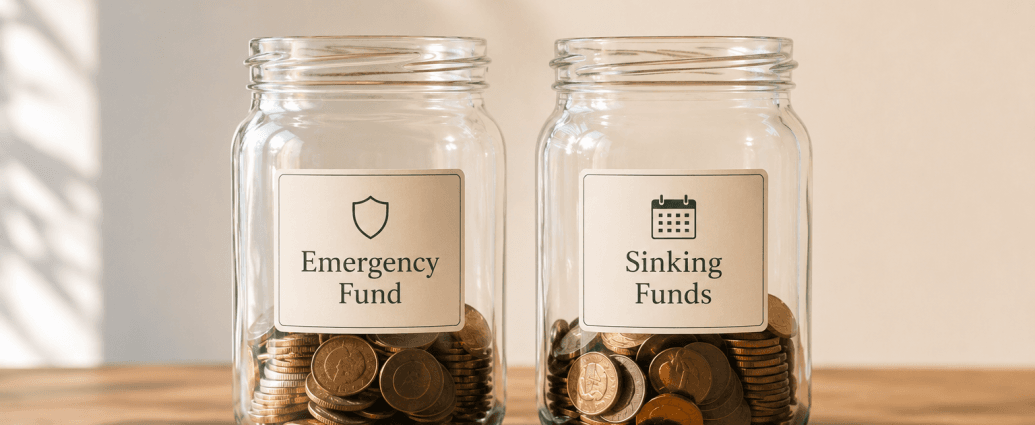
Many women save money regularly and still feel as though they are never making real progress. Understanding the difference between an emergency fund vs sinking funds can help you organise your savings more clearly and avoid using the wrong money for the wrong purpose. The balance in their savings account grows for a while. Then car insurance is due, Christmas arrives, the washing machine needs replacing, or an unexpected medical expense appears.
The money disappears, and it feels like starting again. This does not necessarily mean you are bad at saving. Often, the real problem is that one savings account is being asked to do too many different jobs. An emergency fund and sinking funds are both forms of savings, but they serve different purposes. An emergency fund protects you from serious, unexpected financial disruption.
A sinking fund helps you prepare gradually for expenses you already know are likely to happen. In the AVM Spending Plan, both belong to the Savings category while you are building them. Separating them gives each part of your savings a clear purpose and makes your financial situation easier to understand.
Key Takeaways
- An emergency fund is reserved for expenses that are unexpected, necessary, and urgent.
- A sinking fund is used for planned or reasonably predictable future expenses.
- An emergency fund usually has no planned spending date.
- A sinking fund normally has a specific purpose, target amount, or expected time frame.
- Some car, medical, home, and pet expenses may belong to either fund depending on the circumstances.
- Using a sinking fund does not mean you failed to save. It means the money fulfilled its purpose.
- You can begin with a small emergency buffer and only one or two essential sinking funds.
Emergency Fund vs Sinking Funds: The Simple Definition
An emergency fund is money set aside for serious expenses that are unexpected, urgent, and necessary. A sinking fund is money saved gradually for a future expense that you can reasonably anticipate, even when you do not know the exact final cost or date.
The easiest way to remember the difference is:
An emergency fund prepares you for what you cannot predict. A sinking fund prepares you for what you can anticipate.
Why One General Savings Account Often Creates Confusion
Many people place all their savings into one account.
That money may eventually be needed for:
- annual insurance
- Christmas gifts
- holidays
- car maintenance
- home repairs
- dental treatment
- replacing appliances
- job loss
- urgent family travel
- unexpected medical expenses
The account itself is not necessarily the problem. The difficulty is that the total balance does not show what the money is actually for. You may see €2,000 in savings and feel reasonably secure. However, if €1,400 is already needed for annual insurance, Christmas, car maintenance, and planned dental treatment, your true emergency reserve is only €600. One general balance can create a false sense of financial safety and make every withdrawal feel like lost progress, even when the money is being used exactly as intended. Clear savings categories help you distinguish between money that protects you from emergencies and money that is waiting for a planned expense.
What Is an Emergency Fund?
An emergency fund is a cash reserve set aside for unplanned expenses or financial emergencies.
It is designed to help you manage events that could seriously affect your:
- housing
- health
- safety
- income
- ability to meet essential expenses
Examples may include:
- sudden job loss
- a serious reduction in household income
- an urgent and unexpected medical expense
- an emergency home repair
- a sudden car breakdown when the car is essential for work
- urgent travel connected to a family crisis
- unexpected emergency veterinary treatment
The purpose of an emergency fund is not to remove every difficulty from your life. Its purpose is to prevent an emergency from immediately turning into debt, missed bills, or a larger financial crisis.
What Is a Sinking Fund?
A sinking fund is money you save gradually for a particular future expense. The expense may happen every year, every few years, or at an uncertain date. However, you already know that it is likely to happen eventually.
Common sinking funds include:
- annual car insurance
- vehicle registration
- regular car maintenance
- Christmas and birthdays
- school expenses
- holidays
- planned dental treatment
- routine home maintenance
- replacing a laptop or household appliance
- routine pet care
- professional training
- annual subscriptions
- moving costs
A sinking fund turns a large future expense into smaller, more manageable contributions. Instead of suddenly needing €600, you might save €50 per month for 12 months. When the expense arrives, the money is already available.
Emergency Fund vs Sinking Funds Comparison
| Emergency Fund | Sinking Fund |
| Covers serious, unexpected expenses | Covers planned or predictable expenses |
| Usually has no spending date | Usually has a purpose, target, or expected time frame |
| Used when a genuine emergency occurs | Used when the planned expense arrives |
| Protects overall financial stability | Makes irregular expenses easier to manage |
| Usually kept as one main safety fund | Often divided into several smaller goals |
| Refilled after it is used | Continued, adjusted, rebuilt, or closed after use |
| Prevents emergencies from becoming debt | Prevents predictable costs from feeling like emergencies |
One protects you from uncertainty. The other helps you prepare for ordinary life.
How to Know Whether an Expense Is a Real Emergency
Not every unexpected expense is a financial emergency. An expense may be inconvenient or unplanned without being urgent enough to use your emergency fund. Before using your emergency savings, ask four questions.
1. Was the Expense Unexpected?
Could you reasonably have predicted or prepared for it? Annual insurance is not unexpected. A sudden loss of income may be.
2. Is It Necessary?
Does the expense protect your health, safety, housing, income, or ability to manage daily life? Replacing a broken boiler in winter may be necessary. Buying a newer television is not.
3. Is It Urgent?
Can the expense be delayed without causing serious consequences? An essential car repair may be urgent if you need the car for work. A cosmetic car repair can usually wait.
4. Would Delaying It Cause Greater Harm?
Would postponing the expense threaten your health, safety, home, employment, or financial stability? If the answer is yes, using your emergency fund may be appropriate. A useful decision guide is:
Unexpected + necessary + urgent = possible emergency fund expense
Expected, recurring, or planned = sinking fund expense
Use these questions as a practical guide rather than a rigid rule. Real situations are not always perfectly clear.
Some Expenses Can Belong to Either Fund
Certain costs are not automatically emergency expenses or sinking fund expenses. The circumstances matter.
Car Expenses
Regular servicing, tyre replacement, and vehicle registration belong in a sinking fund. A sudden engine failure may be an emergency if you depend on the car for work, health appointments, or essential family responsibilities.
Medical Expenses
Planned dental treatment belongs in a sinking fund. Urgent medical treatment that could not reasonably have been predicted may require emergency savings.
Home Repairs
Routine maintenance and planned improvements belong in a sinking fund. A burst pipe, failed heating system, or urgent electrical repair may qualify as an emergency.
Pet Expenses
Vaccinations, medication, grooming, and routine check-ups belong in a sinking fund or your regular spending plan. An unexpected operation or emergency veterinary treatment may require your emergency fund. The type of expense matters less than whether it was predictable, necessary, and urgent.
Emergency Fund vs Sinking Funds: Why You Need Both
Imagine Emma, who has €2,000 in one general savings account.
During the year, she uses the same account for:
- car insurance
- Christmas gifts
- home maintenance
- a short holiday
- a dental appointment
By the end of the year, most of the money is gone, and Emma feels as though she has failed to save.
She then separates her money into:
- an Emergency Fund
- a Car Expenses Fund
- a Christmas Fund
- a Home Maintenance Fund
- a Dental Fund
When she pays her car insurance, she uses the car fund. When Christmas arrives, she uses the Christmas fund. Her emergency savings remain available unless a genuine emergency occurs. Her income has not changed. Only the way she manages her savings has.
The Psychology of Watching Savings Disappear
Many women connect a growing savings balance with safety, responsibility, and progress. When the balance decreases, they may feel guilty, anxious, or afraid that they will never get ahead. This reaction is understandable, especially after divorce, burnout, financial instability, or years of managing money with very little margin. For some women, this anxiety can also contribute to avoiding their bank accounts or postponing financial decisions.
However, a sinking fund is not designed to grow forever. It is designed to be used. If you save €720 for annual car insurance and then pay the insurance bill, your savings did not disappear. Your plan worked. Giving every euro a clear purpose can reduce the feeling that every withdrawal is a financial setback.
How Much Should You Keep in an Emergency Fund?
There is no single emergency fund amount that is right for every woman.
You may need a larger financial safety net if you:
- have an unstable income
- are self-employed
- are the only adult supporting your household
- have ongoing health concerns
- own an older car or home
- have limited family support
- work in an uncertain industry
- support children or other financial dependants
Rather than beginning with a large and overwhelming goal, build your emergency fund in stages.
Stage 1: Create a Small Emergency Buffer
Your first goal might be €300, €500, or another amount that could cover a common smaller emergency. Choose an amount that feels meaningful but still realistic.
Stage 2: Save One Month of Essential Expenses
Once your initial buffer is in place, you can work toward one month of essential living expenses.
This may include:
- housing
- utilities
- groceries
- transport
- insurance
- essential health costs
- minimum debt payments
Stage 3: Build Greater Financial Protection
Over time, you may choose to build several months of essential expenses. This is a longer-term goal, not something you need to complete immediately. The appropriate amount depends on the stability of your income, your responsibilities, and the financial risks you may need to manage alone.
How Much Should You Save in a Sinking Fund?
A sinking fund should usually have:
- a clear name
- a target amount or working estimate
- a target date when one exists
- a realistic monthly contribution
- a regular review period
When you know the target date, use this formula:
(Target amount − amount already saved) ÷ months remaining = monthly contribution
For example, Emma needs €720 for her annual car insurance. She has already saved €120, and the payment is due in 10 months.
(€720 − €120) ÷ 10 = €60 per month
| Planned Expense | Target Amount | Already Saved | Months Remaining | Monthly Contribution |
| Annual car insurance | €720 | €120 | 10 | €60 |
| Christmas expenses | €600 | €0 | 10 | €60 |
| New laptop | €1,200 | €200 | 20 | €50 |
| Dental treatment | €900 | €180 | 8 | €90 |
Some sinking funds, such as general home maintenance or future appliance replacement, may not have an exact deadline. In that case, choose a reasonable working target and review it regularly.
If the required monthly contribution feels too high, you can:
- extend the deadline
- reduce the target amount
- choose a lower-cost alternative
- prioritise the most urgent goal
- contribute a smaller amount now and increase it later
A sinking fund should support your life, not create another source of pressure.
Which Sinking Funds Should You Start First?
You do not need ten or fifteen sinking funds. Begin with the expenses most likely to create financial stress.
Prioritise:
Expenses Due Within the Next 12 Months
Review insurance, registration, school costs, Christmas, annual subscriptions, and planned appointments.
Expenses That Have Caused Debt Before
Think about expenses you have previously paid with a credit card, overdraft, or loan.
Expenses Connected to Health, Home, or Work
Car maintenance, dental treatment, essential technology, and home repairs may deserve priority because they protect your daily stability.
Expenses with a Known Amount and Deadline
These are usually the easiest sinking funds to calculate and automate. For many women, one to three starting funds are enough.
Emergency Fund vs Sinking Funds: What Should You Save for First?
If you are starting with no savings, trying to build everything at once may feel impossible.
A realistic order is:
- Build a small emergency buffer.
- Start one or two urgent sinking funds.
- Continue growing your emergency fund.
- Add other sinking funds gradually.
- Review the system as your life changes.
For example, you might begin with:
- €40 per month for your emergency fund
- €30 per month for annual car expenses
- €20 per month for Christmas
The amounts do not need to be large. They need to be sustainable.
Common Mistakes
Using Emergency Savings for Planned Expenses
Christmas, annual insurance, regular car maintenance, and birthdays are not emergencies. If you know an expense is likely to happen, it belongs in a sinking fund.
Treating Every Surprise as an Emergency
An expense can be unexpected without being urgent or necessary. Check whether it can be delayed, reduced, or covered another way.
Creating Too Many Sinking Funds
A long list of categories can become difficult to manage. Start with the most important one to three funds.
Saving Without a Clear Purpose
A sinking fund without a name, target, or purpose is simply general savings. Define what the money is for and how much you need.
Waiting Until You Can Save More
Many women postpone saving because €10, €20, or €30 feels insignificant. Small amounts still create protection.
Feeling Guilty When You Use the Money
Using a sinking fund is not a setback. The money was saved to be spent on that specific purpose.
How Emergency and Sinking Funds Fit into the AVM Spending Plan
In the AVM Spending Plan, contributions to emergency savings and sinking funds belong in the Savings category while you are building them.
Your monthly Savings category might include:
- emergency fund contribution
- car expenses fund
- home maintenance fund
- Christmas fund
- medical fund
- other planned savings goals
When you later use a sinking fund, you are not breaking your spending plan. You are following it. While you are building a sinking fund, the contribution belongs to Savings. When you use the money, record or review the expense according to the way your spending plan is designed, without counting the same money twice. For example, money may be saved gradually in a holiday sinking fund, even though the holiday itself supports Lifestyle Spending.
Good planning is not measured by how long money stays in your account. It is measured by whether the money is available when you need it. The 50/30/20 rule may help you estimate how much of your income could go toward Savings and Investments. This article helps you decide how to divide the Savings part between emergency protection and planned future expenses.
Use the AVM Method to Build Your Savings System
Financial habits are easier to change when you understand your patterns before creating new rules.
Analyze
Begin by reviewing your recent spending patterns and looking back over the last 12 months.
Ask yourself:
- Which expenses seemed unexpected but actually happen regularly?
- Which annual bills always create stress?
- Which costs have forced me to use credit?
- When have I used emergency savings for a planned expense?
- Which expenses affect my health, home, work, or family most?
Write down every irregular expense you can remember. Do not judge yourself. You are gathering information.
Visualize
Picture a savings system that feels simple and safe.
Ask yourself:
- How much would I like to have in a small emergency buffer?
- Which sinking funds would make the biggest difference?
- How would I like to feel when annual expenses arrive?
- What would change if planned costs no longer felt like emergencies?
- What would feeling financially prepared look like in my everyday life?
You are defining a direction, not trying to create a perfect system.
Modify
Choose small, practical actions.
This week, you could:
- Set your first emergency fund target.
- Choose up to three sinking funds.
- Calculate one monthly contribution.
- Rename your savings accounts or banking spaces.
- Set up one automatic transfer.
- Review your progress once a month.
Build a system you can maintain.
A Simple Monthly Example
Imagine you have €150 available for Savings each month. This is not a recommended percentage or fixed formula. It is simply one example of how a monthly Savings amount could be divided.
| Savings Goal | Monthly Amount |
| Emergency Fund | €70 |
| Car Expenses Fund | €35 |
| Christmas Fund | €25 |
| Home Maintenance Fund | €20 |
| Total Savings | €150 |
Someone working with a smaller monthly margin may have only €65 available:
| Savings Goal | Monthly Amount |
| Emergency Fund | €30 |
| Medical Fund | €20 |
| School Expenses Fund | €15 |
| Total Savings | €65 |
Someone with no available Savings amount may need to begin by analyzing current expenses, adjusting other AVM Spending Plan categories, or finding ways to increase income. The right structure is the one that reflects your current reality.
FAQ: Emergency Fund vs Sinking Funds
It depends.
Regular maintenance and predictable repairs belong in a sinking fund. A sudden breakdown may be an emergency if the car is essential for your work, health, or family responsibilities.
Yes, as long as you clearly track how much belongs to each goal.
Separate accounts, banking spaces, or labelled categories may make this easier.
You can, but you do not need to divide your money equally.
A practical approach is to build a small emergency buffer while also saving for one or two unavoidable upcoming expenses.
Start with one to three.
Choose the expenses that are most urgent, predictable, or likely to create debt.
Start with what you can maintain.
A small, regular contribution is more useful than an ambitious amount you cannot sustain.
Keep emergency and sinking fund money somewhere safe and separate from your everyday spending money.
Emergency savings should be accessible when a genuine crisis occurs.
Sinking funds should be available by the time the planned expense is due.
Final Thoughts: Emergency Fund vs Sinking Funds
An emergency fund protects you from serious financial disruption. Sinking funds prepare you for expenses that are part of ordinary life. Separating them helps you understand how much money is genuinely available for emergencies and how much already has a future purpose. Using a sinking fund does not mean your savings disappeared. It means your planning worked. The goal is not simply to save more money. It is to give every part of your savings a clear purpose. Understanding emergency fund vs sinking funds helps you build a savings system that supports both financial stability and everyday planning.
Take the Next Step
You do not need a complicated financial system. You need clear categories, realistic amounts, and a plan that reflects your actual life. Download the free AVM Excel Spending Plan to organise your Essential Spending, Savings, Investments, and Lifestyle Spending in one clear system. Use it to create space for your emergency fund, your sinking funds, and the financial goals that matter most to you.